Things to do
Biển Hồ tea hills: pines, pagoda and how to get there
Biển Hồ tea hills lie on the road to hundred-year-old pines and Bửu Minh Pagoda. Learn the route from Pleiku, the 62.7 ha kept, and the best time to visit.
By the Xin chào Pleiku editorsRechecked
On this page
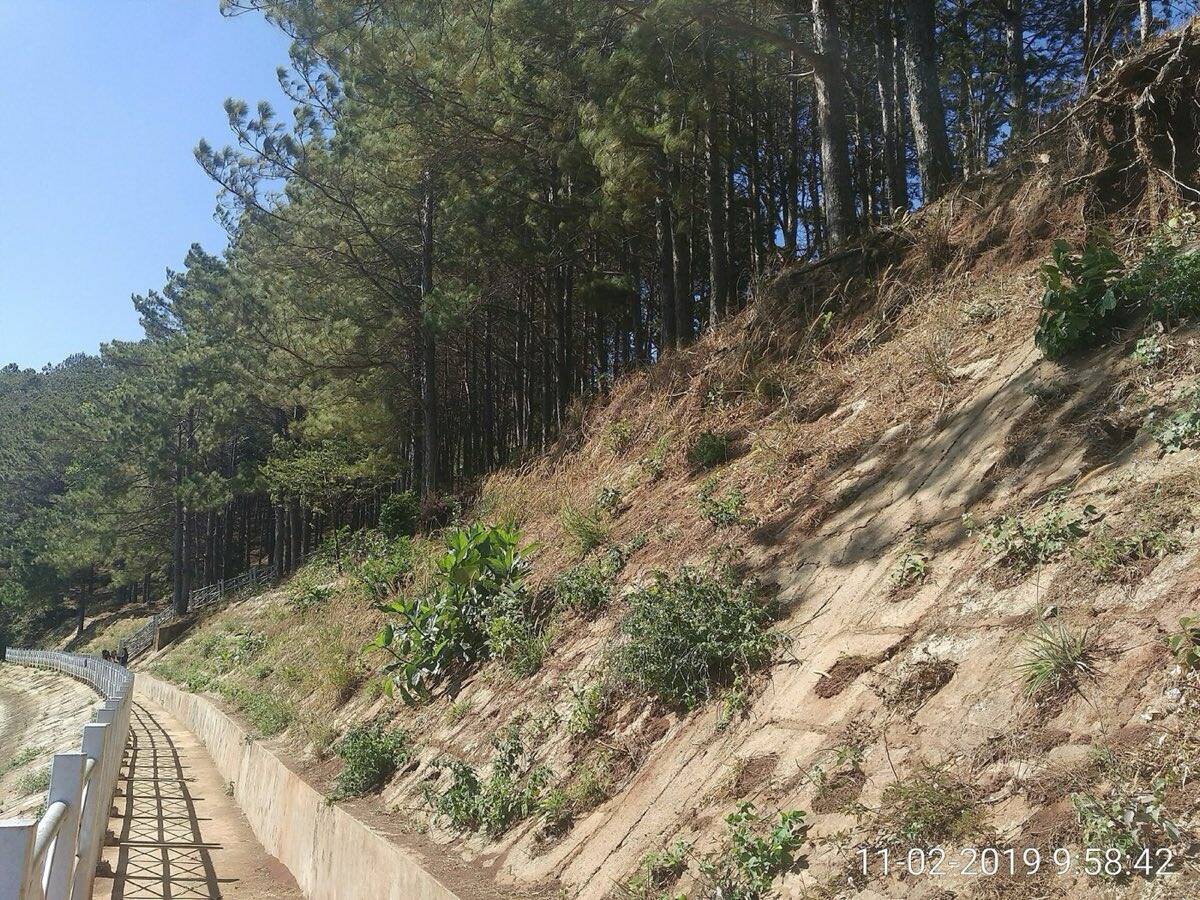
Once you have seen Biển Hồ Lake, do not head straight back. On the lake’s north side there is a stretch of tea hills along the road to a row of hundred-year-old pines and the old Bửu Minh Pagoda. These are working tea fields run by a company. Here is where they came from, how much is protected and how to get there.
Quick plan
- Time: one half-day with the lake; the tea road, pines and pagoda are on one road, and the lake is in the same direction out of town.
- Without a motorbike: take a Grab from the centre; it is over 15 km to the pagoda end, so agree a pickup time for the way back.
- Cost: tickets you find online are for Biển Hồ Lake, not the tea hills; the lake’s adult ticket is 10,000 VND and the electric cart 10,000 VND per person each way (June 2026).
- When: early morning on a dry day, while the sun is soft.
- Bring: a hat and water; walk gently and do not pick the leaves, because it is a company’s working land.
Getting from central Pleiku to Biển Hồ Tea Hills
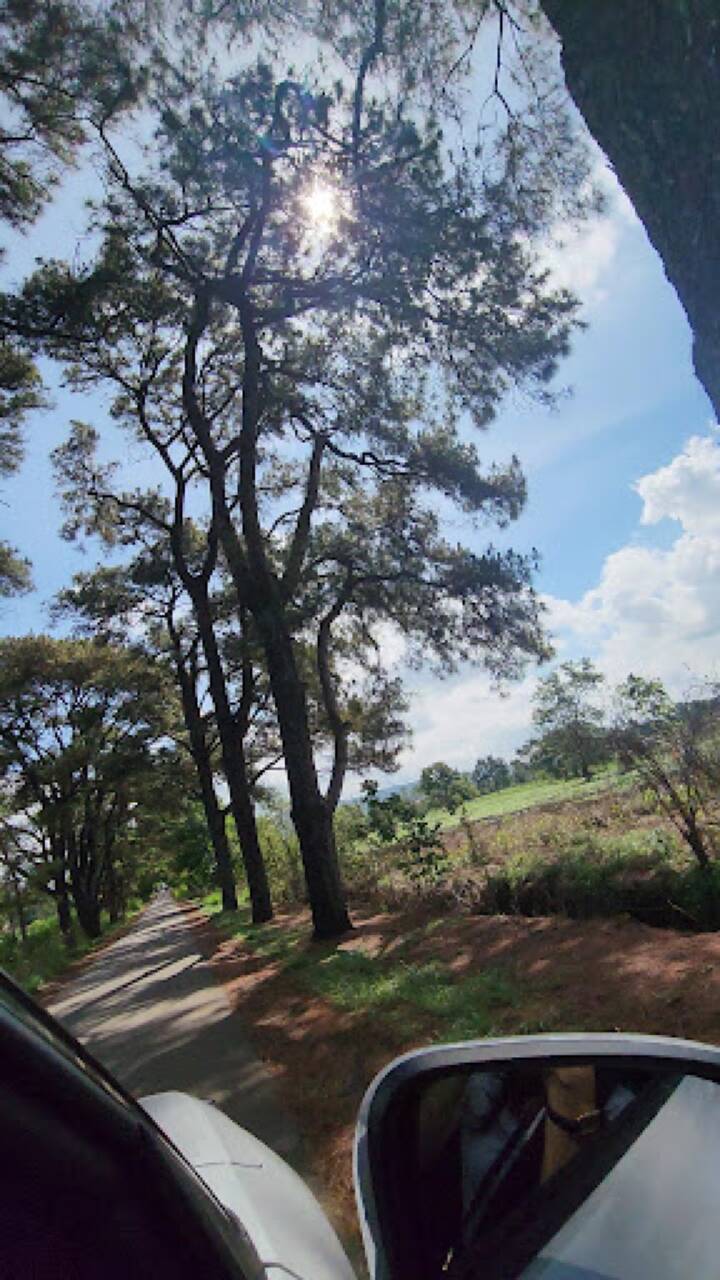
Take Highway 14 toward Kon Tum, turn right onto Lê Văn Sỹ street (from the airport that is about 7 to 8 km along), then turn left across the Nghĩa Hưng spillway. Keep going to the pine-lined road, with the tea garden on the right of the hundred-year-old pines. At the end of that road, turn left for Bửu Minh Pagoda.
The tea hills lie on the way to the pagoda, so count on over 15 km from the centre, not the lake’s 7 km. A motorbike, car or Grab all work. On a phone map, the spot appears as Hai hàng thông (Two Rows of Pines) in Biển Hồ commune. Some directions still use old names such as “toward Kon Tum (old)” or Nghĩa Hưng, so hang on to three landmarks: Lê Văn Sỹ street, the Nghĩa Hưng spillway and the hundred-year-old pines.
When the tea hills look best

We recommend an early morning, while the sun is soft and photos come out better than at midday, on a dry day so the track is easy. Want the lake in the afternoon? See Biển Hồ Lake.
The hundred-year-old pines and Buu Minh Pagoda at the end of the road
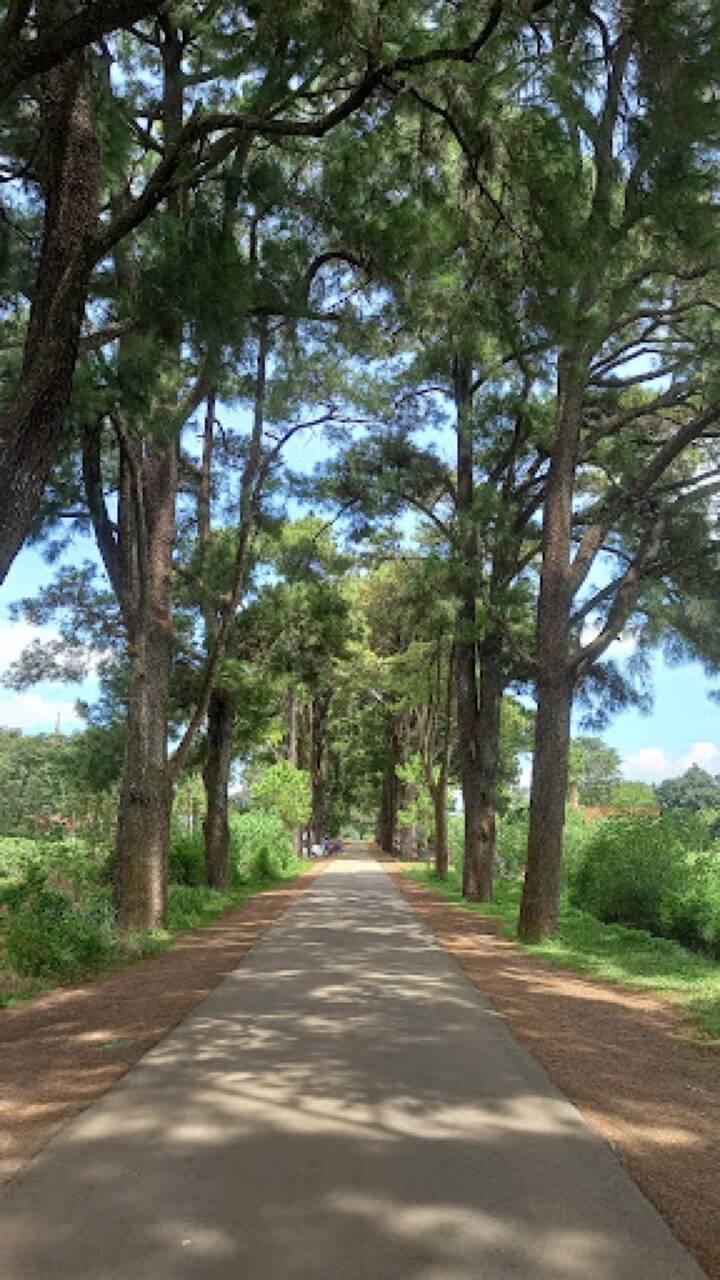
The tea is tied to a road lined with pines more than 100 years old, and at the end of it stands Bửu Minh Pagoda, now surrounded by endless tea. It is one of the earliest pagodas built on the Pleiku plateau.
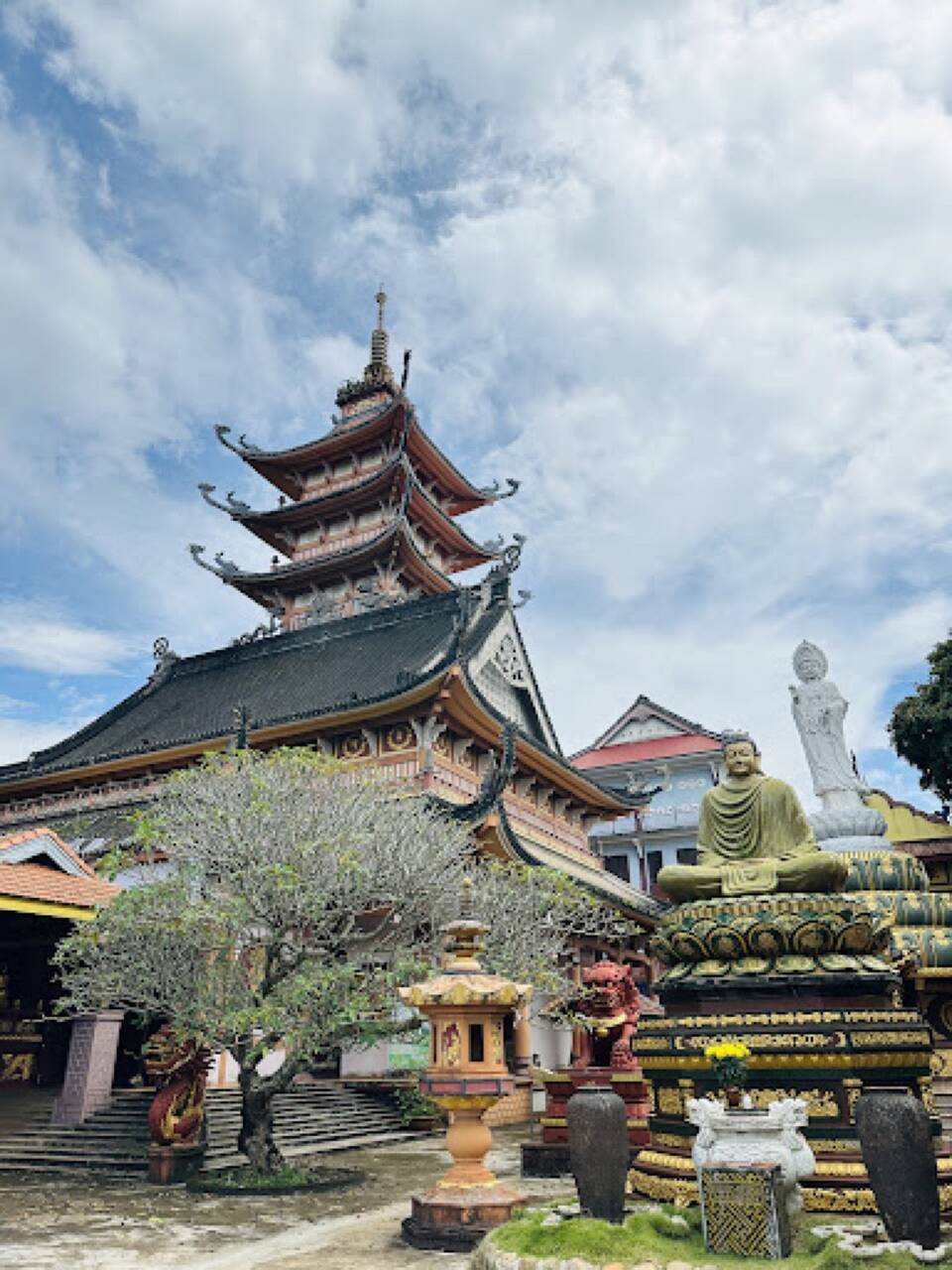
It was largely rebuilt from 2003, and it now has one of the biggest prayer wheel sets in the country. Nearby there is a small shrine of the Cỏ May hamlet tea workers, called Sơn Hải Miếu or Dinh Bà.
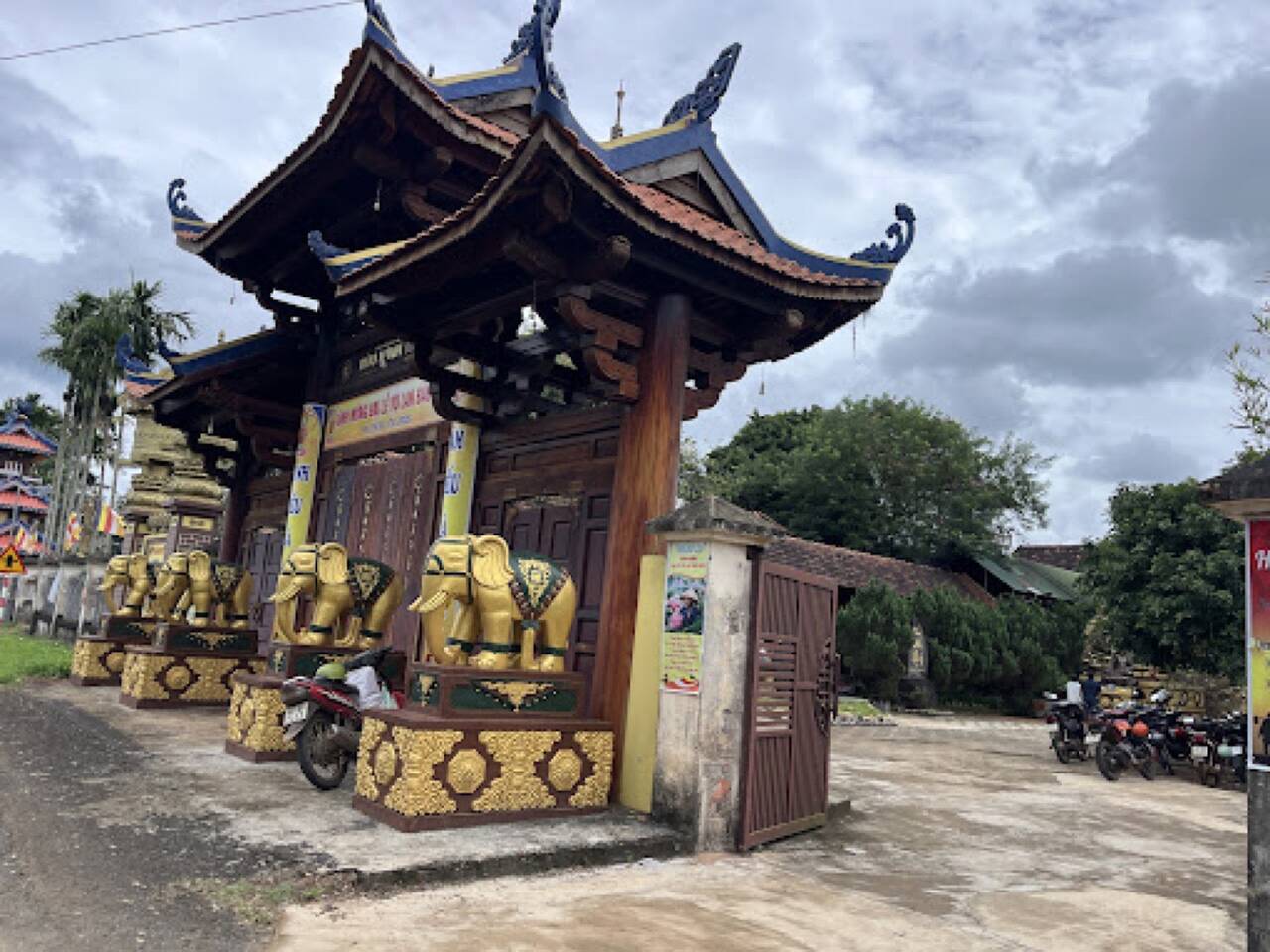
Tea, pines and pagoda sit on one road. One more stop? Try the Chư Đăng Ya volcano; other places are under Things to do.
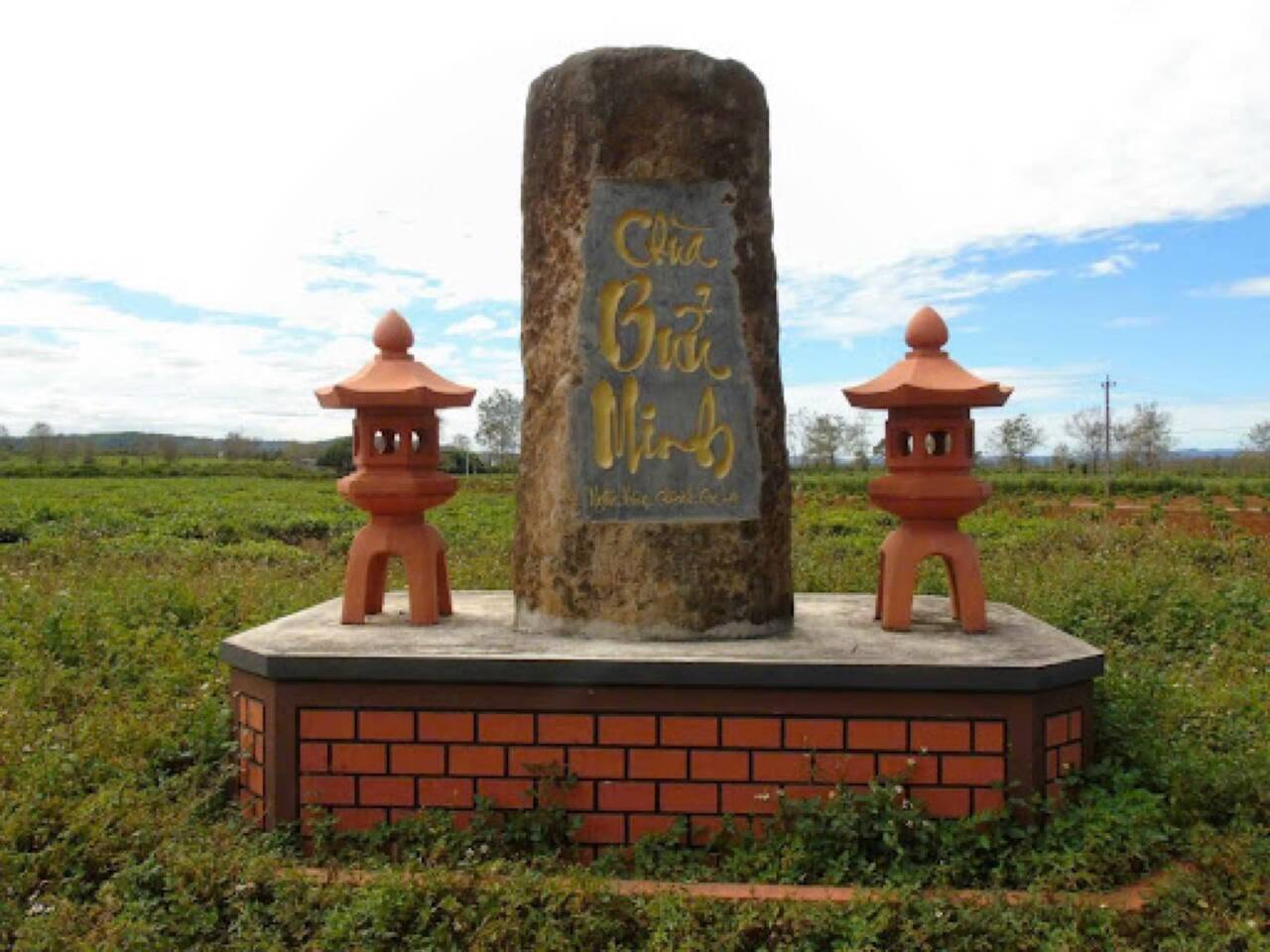
A half-day loop: tea, pagoda, lake
Only one morning? Start at the tea hills, follow the pine road to Bửu Minh Pagoda, and come back to the lake once the sun is up. At the lake, allow time for the road from the gate down to the water, almost 1 km, with an electric cart at 10,000 VND a person each way (June 2026), about 5 minutes.
Tickets you find online are usually for the lake, not the tea hills; they are in Biển Hồ Lake. For news, see the Biển Hồ commune tourism page and the story on the decision to keep the tea; the province’s Biển Hồ page gives the distance to the lake.
The story behind the tea hills
Where the tea hills came from
The plantation goes back to the French. Between 1919 and 1920 the French company P.I.T. (Plantation Indochinoise des Thés) asked the colonial authorities for land north of the lake to plant tea. It was the first French plantation on the Pleiku plateau. The Biển Hồ tea estate was built from 1921 and is the forerunner of today’s tea company; the first tea office stood on the north shore of Ia Nueng lake, which is Biển Hồ. The hills have a long link with the people living around them. Since September 2010 the business has been a one-member company, and it is now known as Biển Hồ Tea Joint Stock Company, in Biển Hồ commune.
Because this is a company’s land and not a park, walk gently, ask the person on duty before you step into a tea block or photograph workers, and do not pick the leaves.
The 62.7 ha the province kept
The province decided to keep 62.7 ha of tea as part of the tourist scenery, following a policy set before the provincial merger. It had to decide because the company asked to convert part of the tea land to coffee, saying tea had been hard to sell and was losing money. The first proposal was to convert 236.9 ha to coffee and keep only 62.7 ha for scenery.
In the end the tea tied to the hundred-year-old pines, Bửu Minh Pagoda and Ya Lũ lake stayed. The same decision asked the company to keep over 62 ha for scenery and tourism while over 236 ha went to coffee. At that point the contract households and the company also asked to convert about 40 ha more near Ya Lũ lake, but provincial leaders held to the current state because the landscape has high historical, cultural and tourism value. Biển Hồ commune is in charge of checking how the tea is looked after.
So the tea around the pines, pagoda and Ya Lũ lake is the protected part, while land already switched to coffee looks different. Do not expect one unbroken sea of tea.
Sources
(7)
- Giới thiệu điểm văn hóa, du lịch trên địa bàn xã Biển Hồ
- Giữ 62,7ha chè tại Biển Hồ để tạo cảnh quan du lịch, không cho phá để trồng cà phê
- Biển Hồ (hay còn gọi là Hồ T'Nưng) - Danh lam thắng cảnh
- Gia Lai: Giữ nguyên hơn 62ha chè ở Biển Hồ để tạo cảnh quan đặc trưng gắn với du lịch
- Gia Lai: Thu phí tham quan tại Di tích thắng cảnh Biển Hồ trong dịp Tết Nguyên đán 2019
- Khám Phá Biển Hồ Pleiku Gia Lai (video, đăng 03/06/2026)
- Biển Hồ chè (Google Maps)
Photos
(7)
Phan Xuân Chánh (Pxchanh) / Wikimedia Commons, CC0 · Băng Thủy Trần · T-Adventure · Nguyễn Thanh Trí · Minh Tiên ở Tây Nghiêng · Mr Phan · HUUAN NGUYEN

Spotted an error? Send a correction · How we choose sources