Things to do
Chư Đăng Ya volcano: when to go and how to get there
Chư Đăng Ya volcano is about 30 km from central Pleiku. See which month brings yellow sunflowers or red canna, how to get there, and the 2026 festival dates.
By the Xin chào Pleiku editorsRechecked
On this page
- Quick plan
- What you will see in each month
- What Chư Đăng Ya volcano is
- Getting from Pleiku to Chư Đăng Ya
- Climbing the crater: opening hours, slope and what to bring
- One morning combining Chư Đăng Ya, Biển Hồ and Ia Gri village
- Which flowers fall in which month
- Gong festival and Wild Sunflower Week 2026: the schedule as planned by the province
- What to eat near the volcano
- What to check before you go
The mountain changes with the calendar. In the dry season it is covered in yellow wild sunflowers, in the rains it turns red with canna lilies, and in festival week it becomes a stage. Crowds, road conditions and what you can do all change with it, so pick your date before you pick your ride. The name is also written Chư Đăng Ya. Below: which month shows what, how to get there from Pleiku, the climb, a half-day that also takes in Biển Hồ, and the 2026 festival as the province has planned it.
Quick plan
- Time: a half-day, not a quick stop; it is about 30 km from the centre, and the climb to the crater is about 400 m, steep and rough.
- Without a motorbike: take a taxi and agree a price for the driver to wait and bring you back, instead of paying for two rides. Fares: Taxi Phố Núi 20,000 VND for the first 2 km then 8,800 VND per km; Let’s Go Taxi 16,000 VND for the first 2 km then 8,900 VND per km (September 2026).
- Cost: the taxi fare above; the photo spot at the foot of the mountain sells its own ticket, and you can skip it.
- When: open daily 4:30 am to 6 pm; late October to early November for yellow sunflowers, July to October for red canna; be there at 5 am for sunrise.
- Bring: shoes with good grip, water and a hat, plus a rain jacket from May to October.
What you will see in each month
If you are still choosing a month, start here. Each row says what is blooming, what the weather does to the path, and whether it is worth going.
| Month | What you will see | Worth it? |
|---|---|---|
| December to April | Dry season. Both flower seasons are over. | Yes, if you just want a dry climb. Not for flowers. |
| May to June | The rains begin. No canna yet, and the climb is steep to begin with. | Wait for another month. |
| July to September | Red canna lilies in full bloom across the slopes, in the rainy season. | Yes, if you want the red and can handle a wet path. |
| October | Canna lasts until the end of the month, and the sunflowers start to open late in the month. The rains are ending. | Go in the last days: both flowers overlap and the festival starts on 30 October. |
| November | Yellow sunflowers cover the mountain, peaking early in the month and in full bloom for about two to three weeks. The dry season begins, and the festival runs to 8 November. | Yes, this is the sunflower month. Aim for the middle of the bloom, not the very start or end. |
Local tip: the floor of the crater is farmland, planted with pumpkin, sweet potato and canna. Canna is the main crop because it survives drought. However pretty the flowers look, do not walk into the fields.
What Chư Đăng Ya volcano is
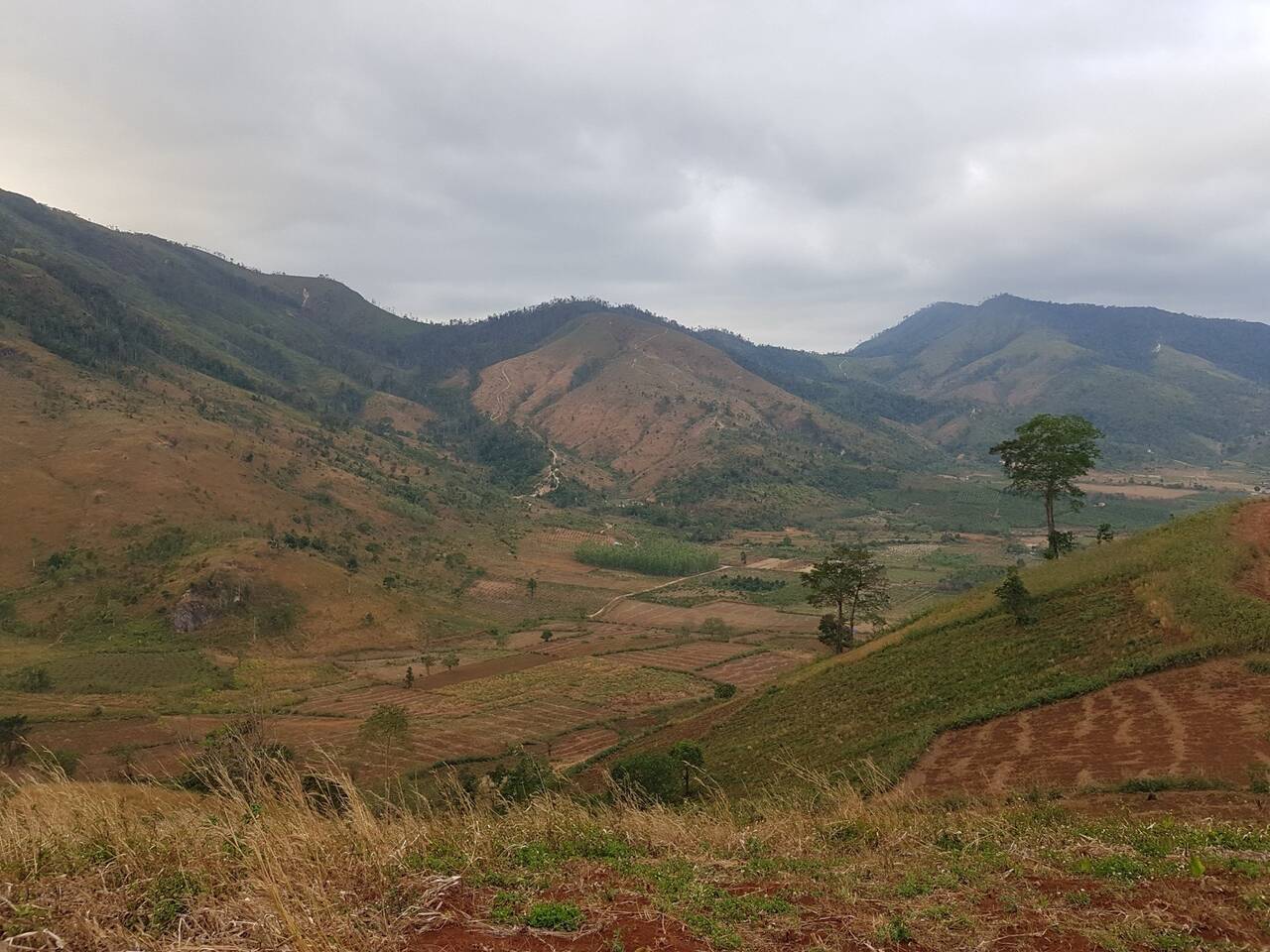
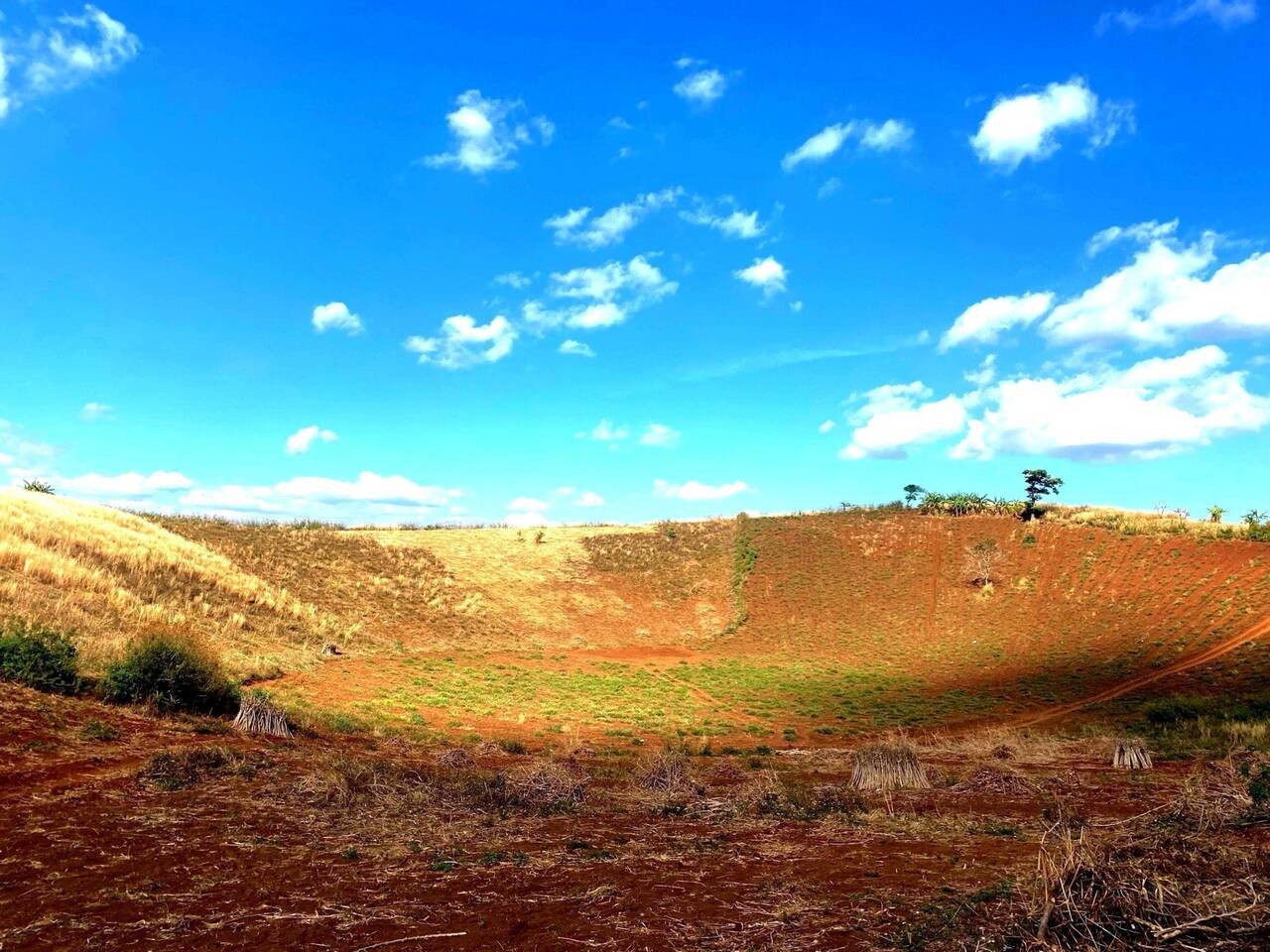
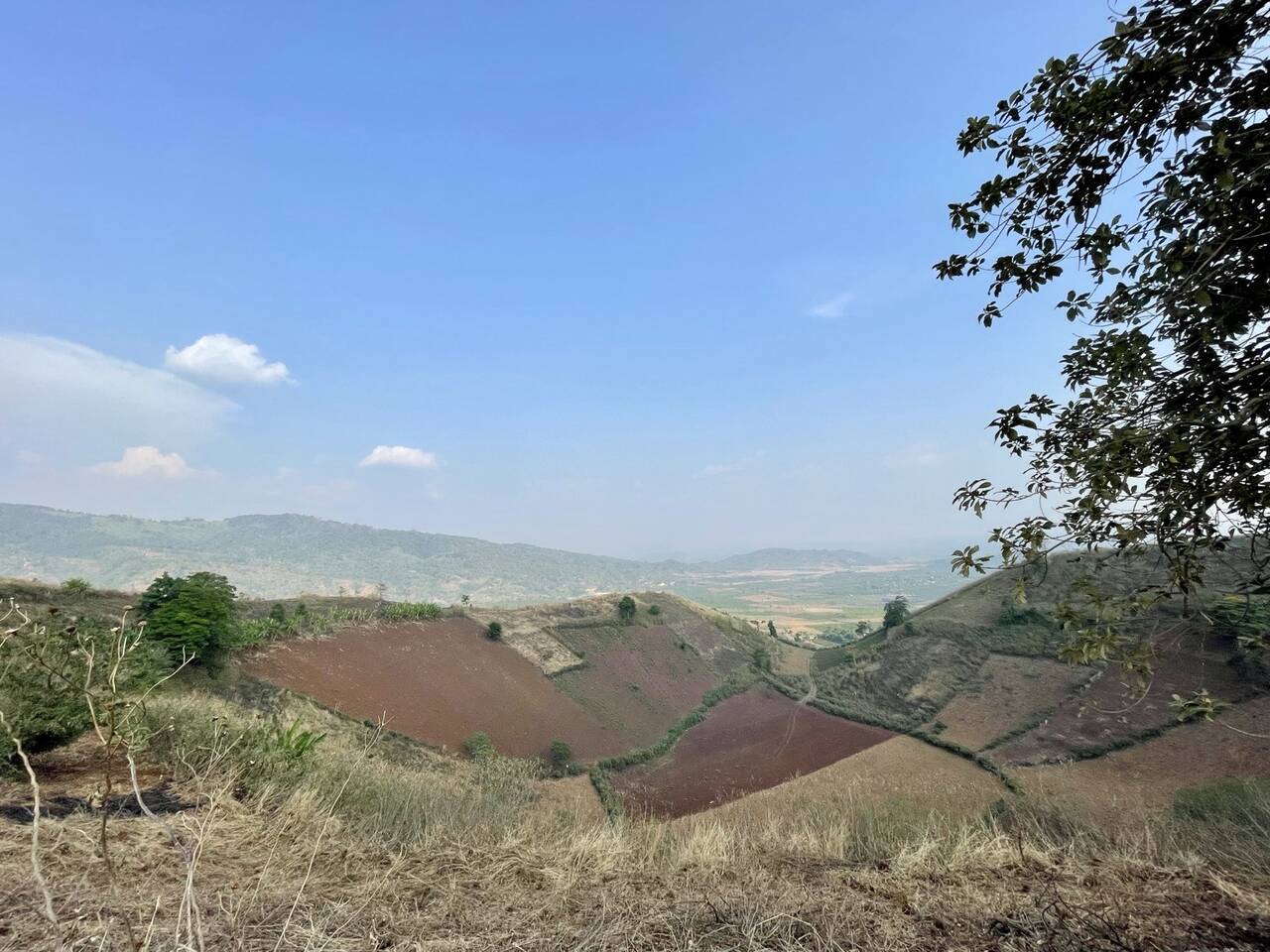
Chư Đăng Ya is a group of three small volcanoes side by side, in Ploi Lagri village, Biển Hồ commune, Gia Lai. It blew and flowed, leaving lava bombs and lava rock behind. Geologists say it was active millions of years ago and left a wide funnel-shaped crater. It no longer erupts.
What makes it worth the trip is how much it has changed. The crater that once glowed red is now a green hill, and that quiet is what gives the landscape its simple pull. For the local Jrai people the mountain is sacred and tied to legends and village festivals, and the houses and fields at its foot belong to Jrai families. The area is protected as a geological and scenic resource of real natural and cultural value. So treat it as a place where people live and worship, not just a photo spot: keep the paths clean, stay out of the fields, and ask before you photograph anyone.
Getting from Pleiku to Chư Đăng Ya
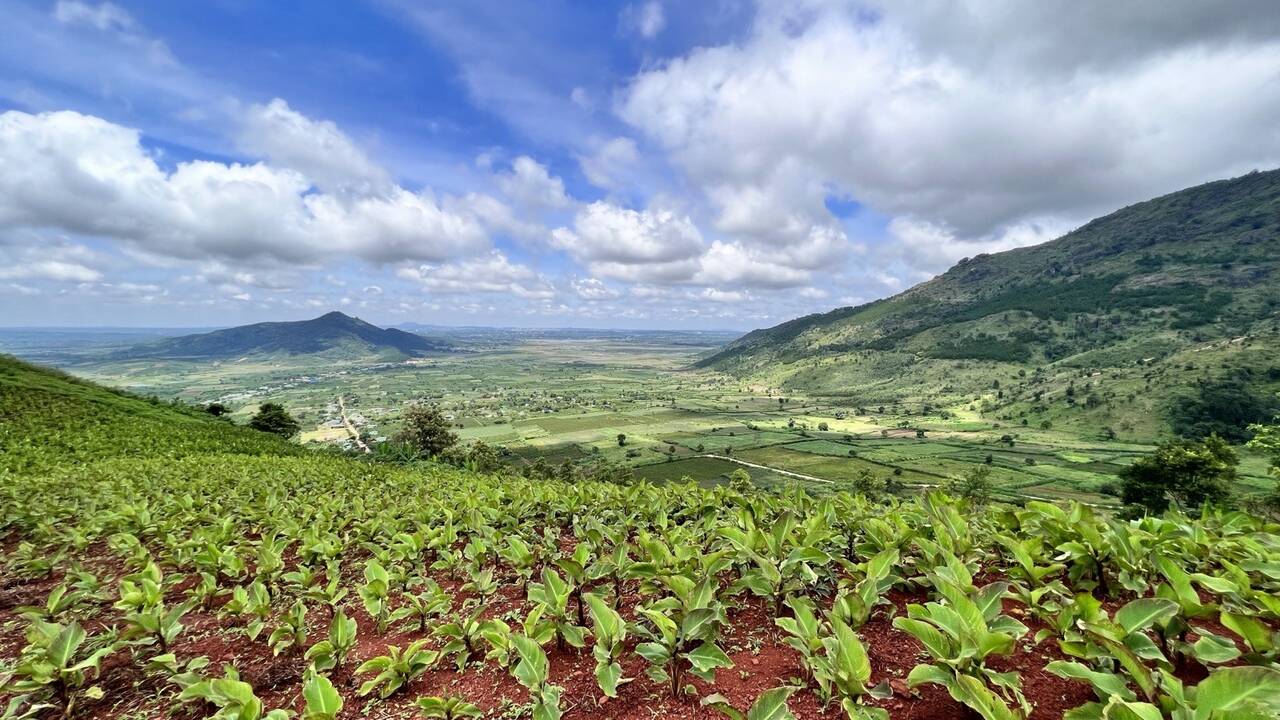
The volcano is in Biển Hồ commune, about 30 km north-east of central Pleiku and 20 km from Biển Hồ Lake. Plan a half-day rather than a quick stop, and fill your tank and water bottle before you leave town.
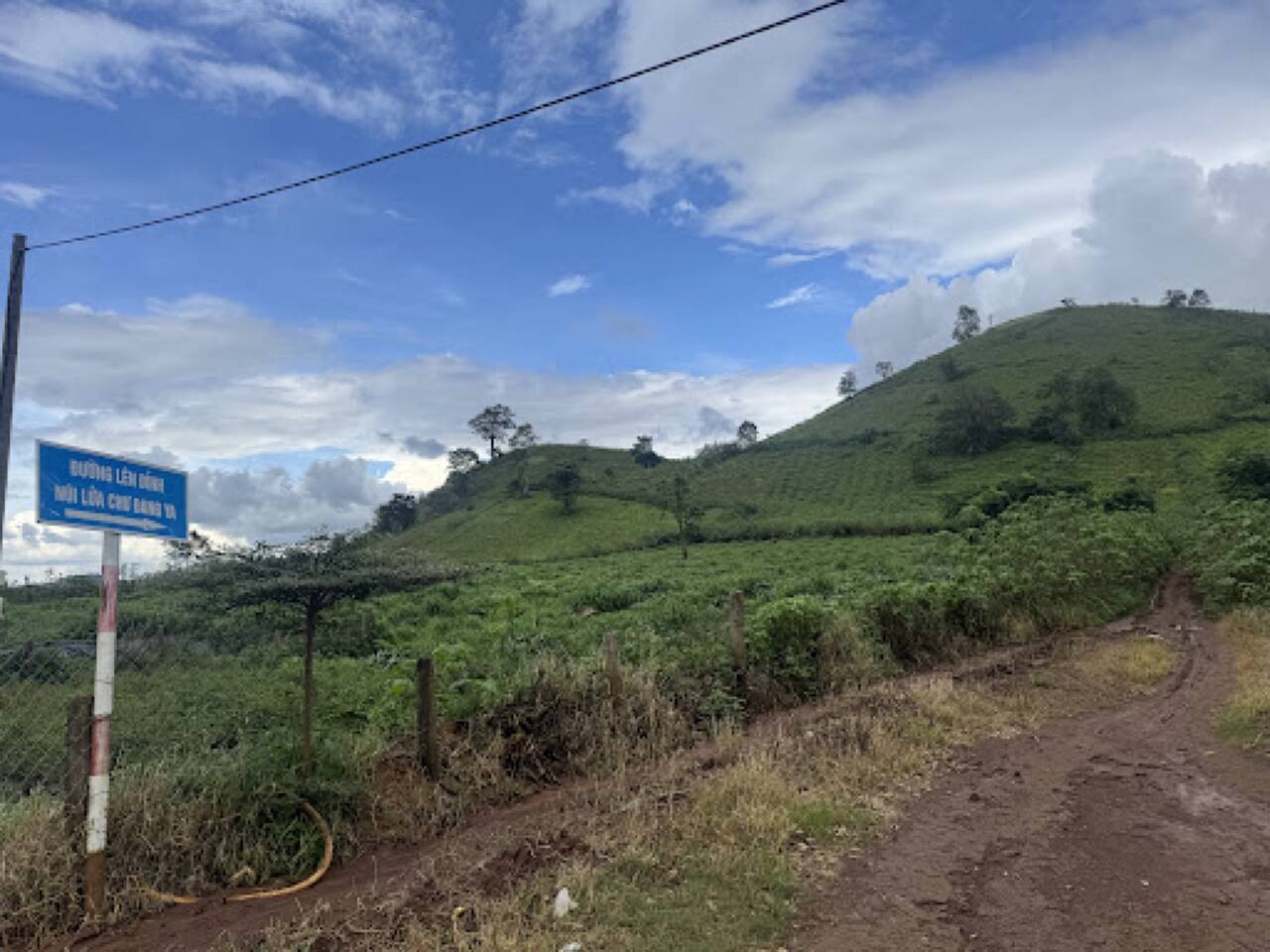
The usual way is motorbike or private car: drive from the Biển Hồ crossroads towards Kon Tum for about 3 km, then turn onto Lê Văn Sỹ street. After 1.7 km, turn across the dam onto the pine-lined road. Cross Tân Sơn dam and go on for another 5 km to the volcano. Before you leave town, open your map app and search “núi lửa Chư Đăng Ya”. If it finds nothing, try Ia Gri village, where the festival activities are held.
With no vehicle of your own, take a taxi. For a four-seat car, Taxi Phố Núi charges 20,000 VND for the first 2 km and 8,800 VND per km up to km 30, and Let’s Go Taxi charges 16,000 VND for the first 2 km and 8,900 VND per km (prices from September 2026). The meter runs on every kilometre of a trip of about 30 km, so agree a price with the driver to wait and bring you back instead of paying for two separate rides. Grab and Xanh SM are covered in Taxi and ride-hailing in Pleiku.
If you would rather have someone handle the car and lunch, book a package tour with a licensed operator. Ask for the pick-up point, the return time and exactly what is included before you pay a deposit.
The area is also part of a long-term plan. It has been a national-scale tourist zone since late 2023, and the province has approved a master-planning brief for it up to 2050. More facilities are planned to draw visitors, so ticket prices, entrances and services may change.
Climbing the crater: opening hours, slope and what to bring
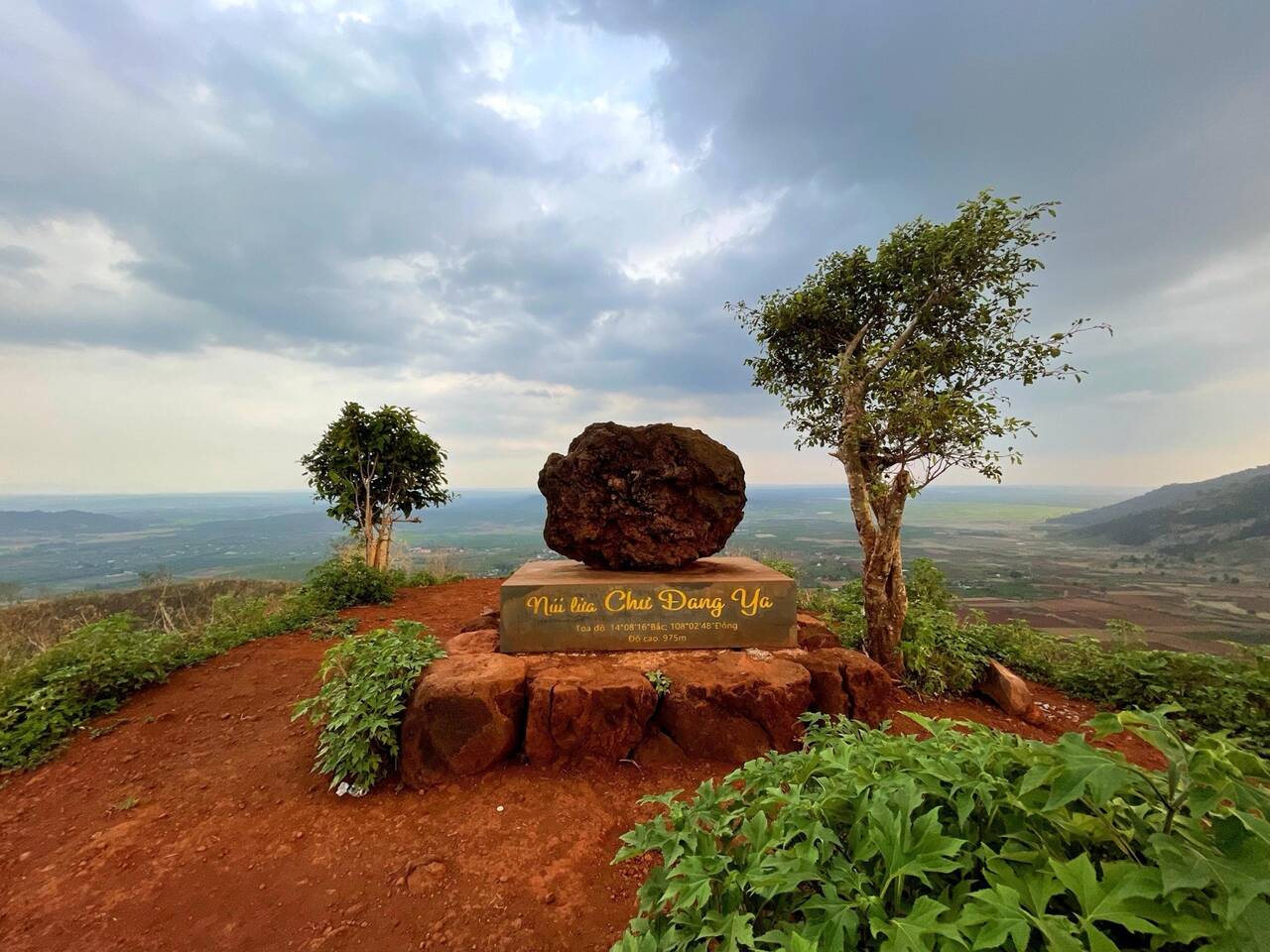
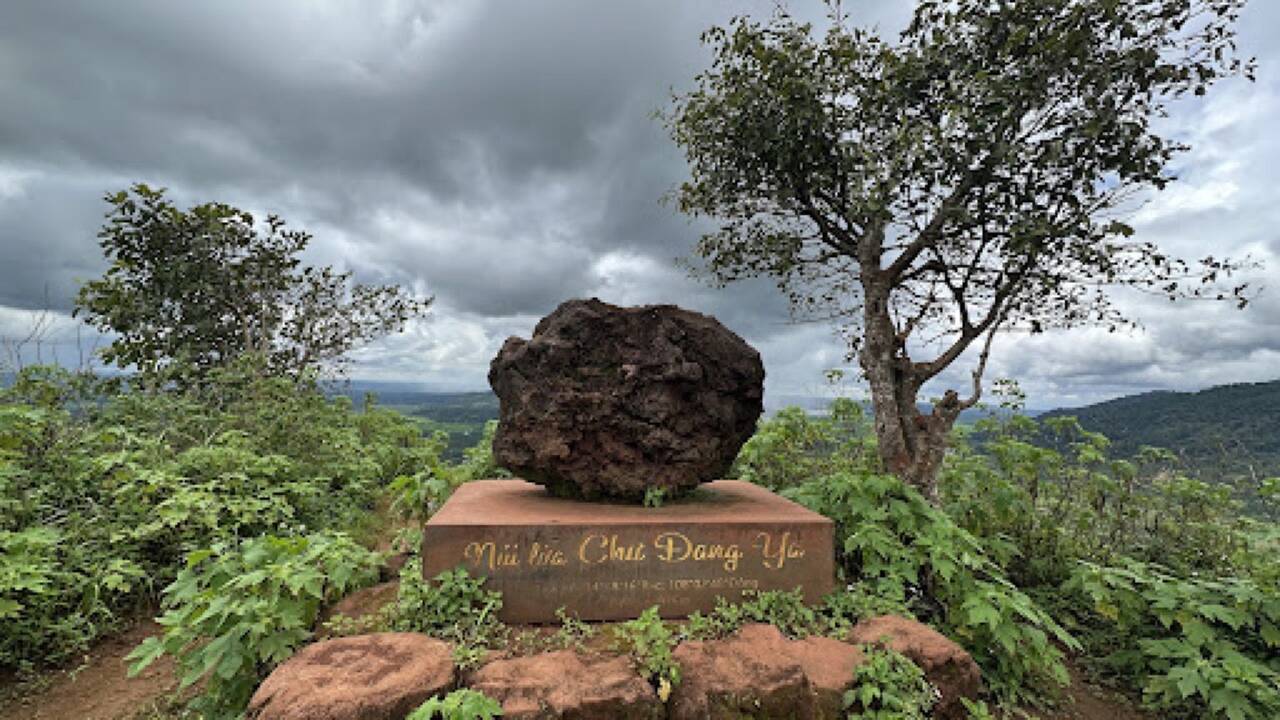
The volcano is open daily from 4:30 am to 6 pm, so go early while the sun is soft and be back down before evening. The climb is about 400 m, steep and rough: a proper climb, not a stroll. Wear shoes with good grip rather than sandals, and bring water and a hat. If you climb between May and October, add a rain jacket.
For sunrise you need to be there at 5 am, which means leaving town in the dark; the gate is already open.
At the top you will find a lump of volcanic rock on a plinth carved with the mountain’s name. Save your energy for the climb and do not stack another sight onto this early start.
Local tip: at the foot of the mountain there is a photo spot run by local flower growers, who sell a separate ticket to anyone who wants to take pictures there. Go in only if you fancy it.
One morning combining Chư Đăng Ya, Biển Hồ and Ia Gri village
With one morning and a wish to see both the mountain and the lake, climb first, because you need the early start. Then drop to Ia Gri village at the foot, where the festival holds its activities from 30 October to 1 November, and head back along the pine-lined road, through the tea hills and on to the lake. The pine road and the tea hills sit right on the way in to the volcano, and the commune suggests linking Biển Hồ, Ia Nueng village, Chư Đăng Ya, Bửu Minh Pagoda and the hundred-year-old pines. Read more about the lake in Biển Hồ Lake (T’Nưng) and about the tea, pines and pagoda in Biển Hồ Tea Hills.
We recommend making the volcano the main event, adding the pines and tea on the way back, and keeping the lake for the afternoon. All five stops in one day is too much. For more ideas around town, see things to do in Pleiku.
Our pick. If you would rather not find the way up on your own, message Brad at Pleiku Adventures Homestay. He is Australian, lives in Pleiku and speaks English, and the homestay can arrange a volcano climb or a bike ride through the coffee hills nearby.
Which flowers fall in which month
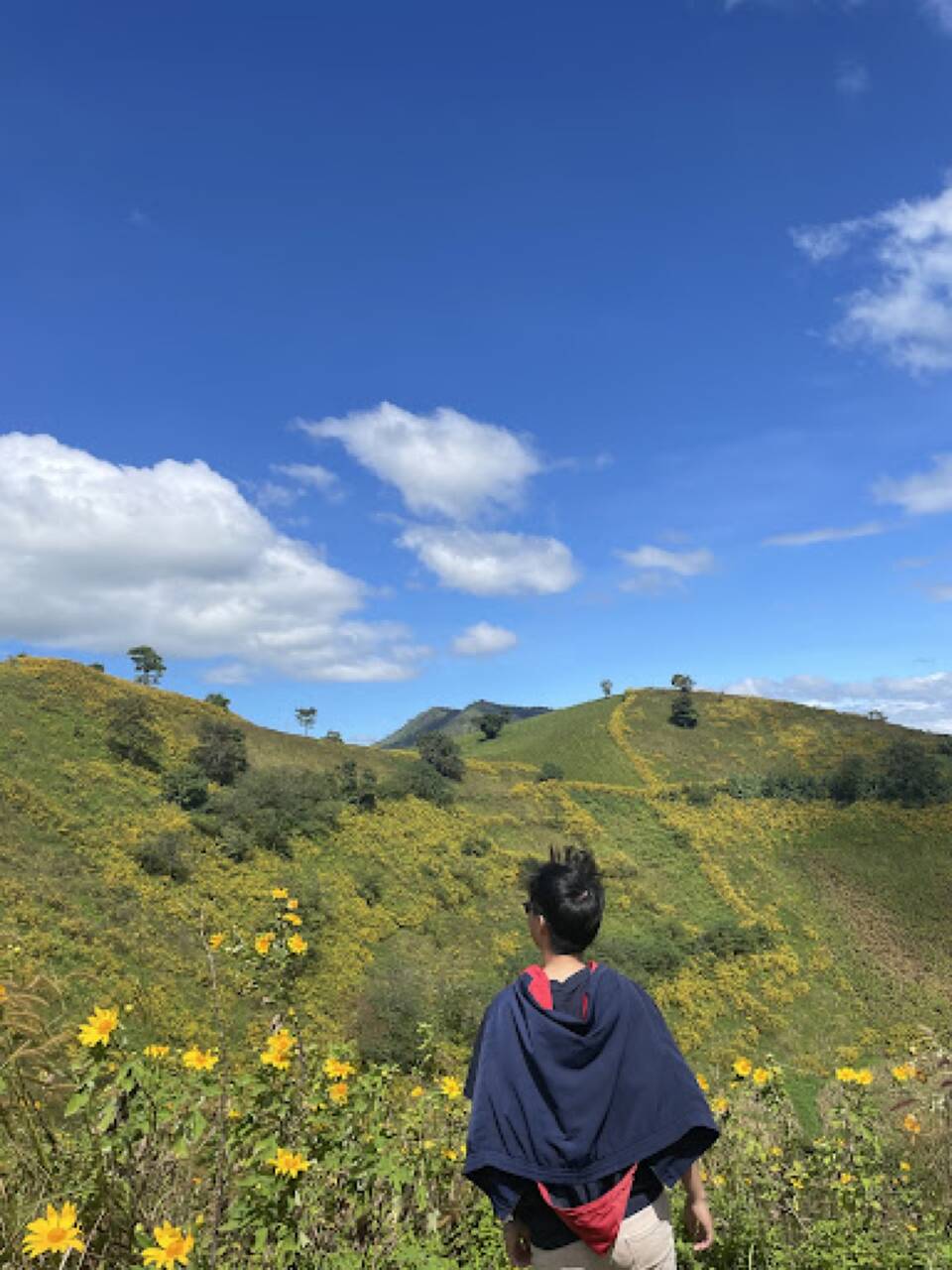
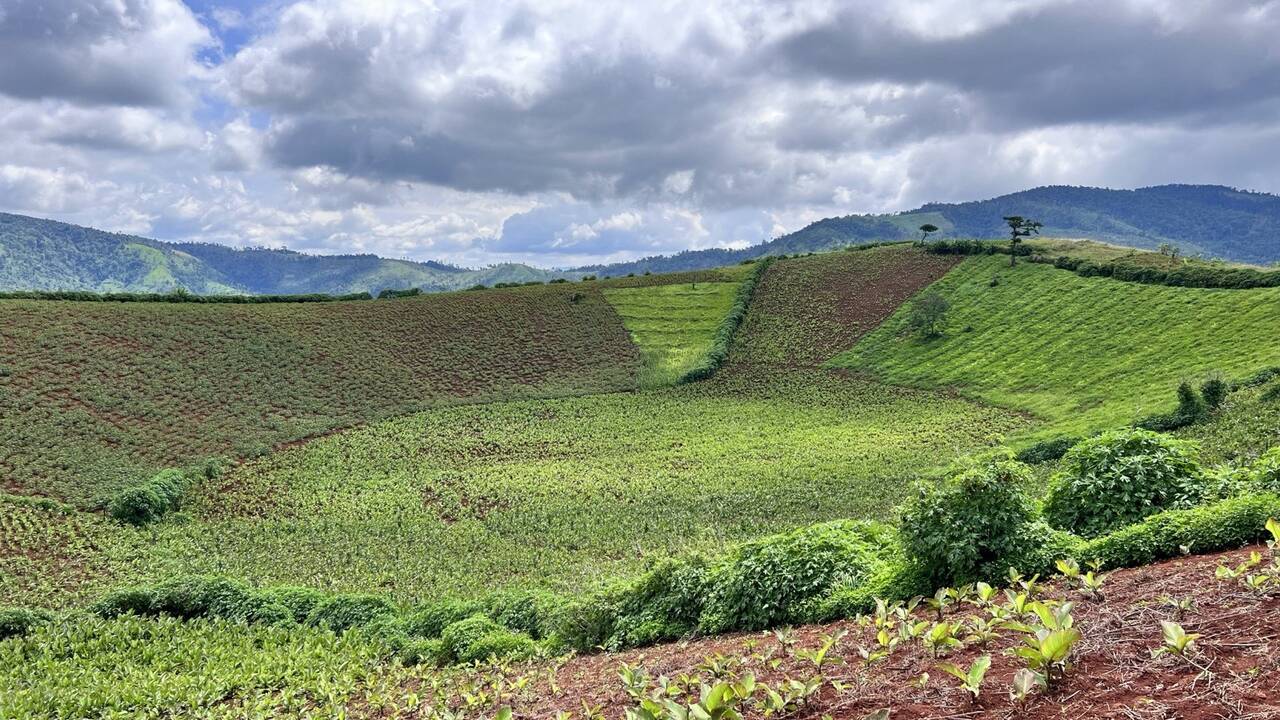
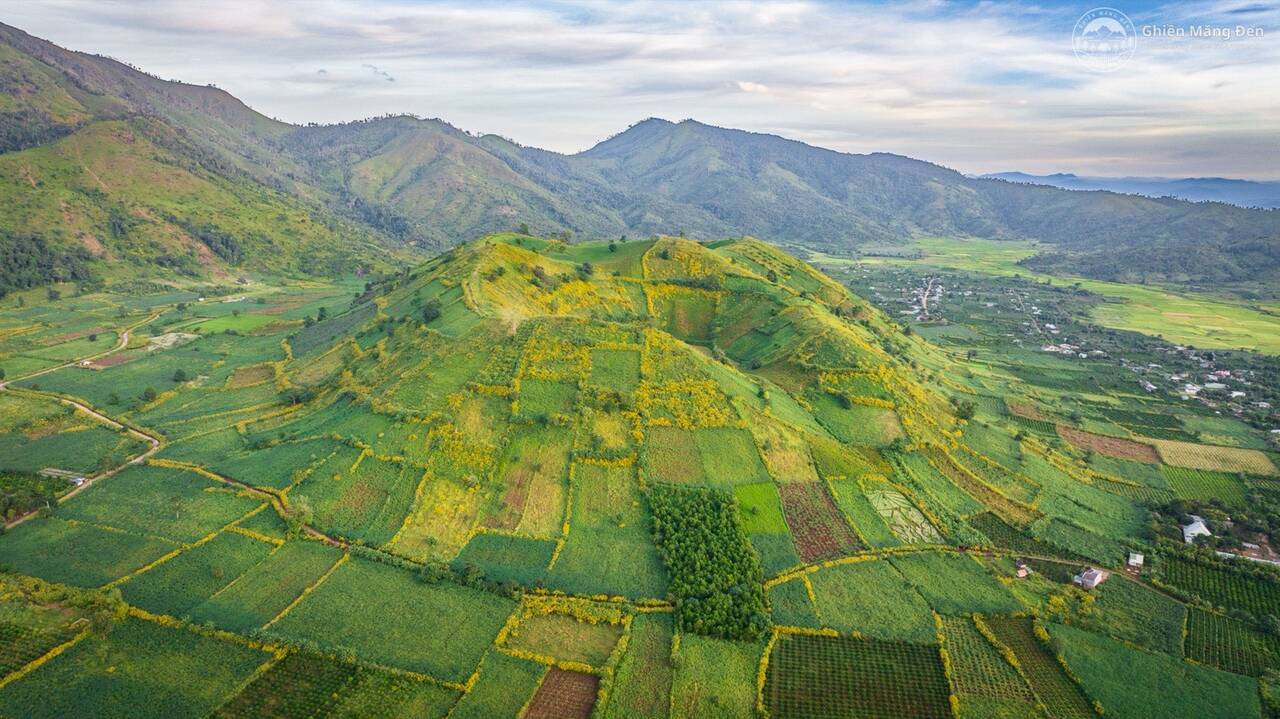
The colour depends on the month you choose. In the dry season the mountain is covered in the bright yellow of wild sunflowers, usually at their best from late October to early November. They bloom in full for only about two to three weeks, so arrive too early or too late and you may find buds or faded petals.
In the rainy season the slopes turn red with canna lilies, which usually bloom fully from July to October. The two seasons meet around October. Come for red canna in the rains, and from the end of October for yellow sunflowers.
Flowering follows each year’s weather, so treat the months as a guide and check the commune’s updates on the flowers a few days before you go.
Gong festival and Wild Sunflower Week 2026: the schedule as planned by the province
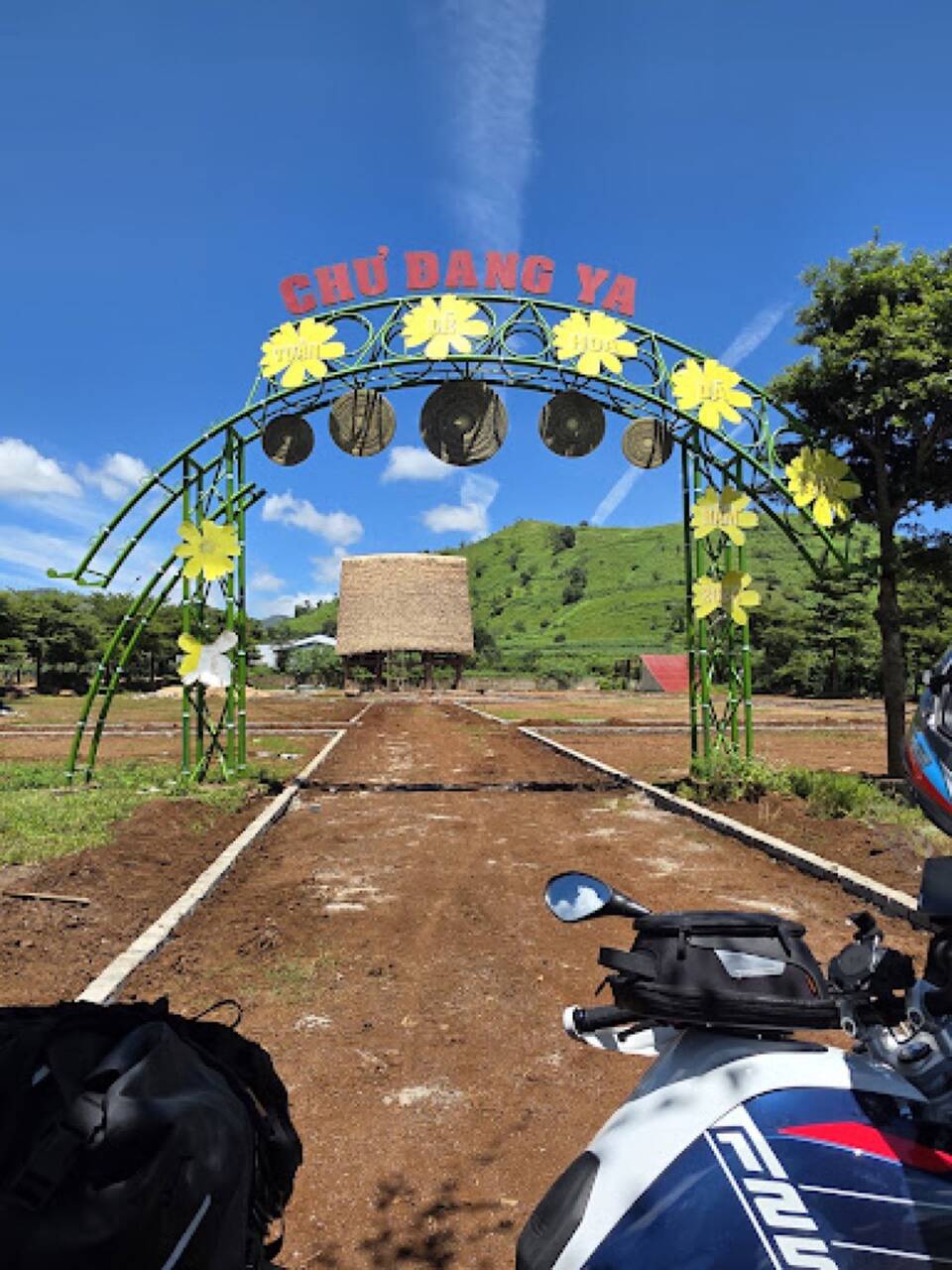
Go during the festival and the mountain feels very different. The Gia Lai Gong Festival 2026 runs from 30 October to 8 November, in Pleiku, Biển Hồ commune and a few nearby areas.
The programme is split by place. From 30 October to 1 November, activities are in Ia Gri village, close to the volcano. The peak, 6 to 8 November, moves to Great Unity Square (Đại Đoàn Kết), the Pleiku Museum and some central streets, so pick your day by where you want to be. The international gong night is planned for the evening of 7 November at Great Unity Square. Expect gong performances, traditional cultural exchange, a street festival, folk games, a food area and local OCOP products. The commune also has brocade weaving, basketry and statue carving at festival times.
Two things to know before you plan around it. The scale and the name are not settled: since early October the event has been changed from an international to a national scale, although some places still call it an international festival. And this year’s programme is much longer than usual: Wild Sunflower Week at the volcano is normally a yearly event of about three days in mid-November. It opened on the morning of 8 November in 2024 and was expected in mid-November in 2025.
On the practical side, the province has asked for roads, parking, landscaping, cleaning, power, water and toilets around the volcano and Ia Gri village to be finished, and for a plan for electric shuttle cars during the event. The festival belongs to the National Tourism Year, Gia Lai 2026, and the province has already released its visual identity.
Read the dates as the province’s plan, not a fixed timetable for every event, and check again before you travel.
What to eat near the volcano
You will be hungry after the climb, so plan lunch before you go. During the festival it is easy: local families serve cơm lam (rice cooked in bamboo), grilled chicken and rượu cần (rice wine drunk through long straws), and the district sets up 30 stalls of local specialities. On an ordinary day, eat a solid breakfast in town before you head out, then have lunch back in Pleiku. Breakfast in Pleiku and phở khô, Pleiku’s dry noodles have ideas.
What to check before you go
Check which festival day you plan to attend and how the flowers are doing that week. Chư Đăng Ya sits on several tour routes around Biển Hồ, and the geology and culture behind the mountain are worth reading about before you go.
Sources
(16)
- Giới thiệu điểm văn hóa, du lịch trên địa bàn xã Biển Hồ
- Chư Đăng Ya mở rộng sức hút từ mùa hoa dã quỳ
- Gia Lai tổ chức Festival quốc tế Cồng chiêng
- Đánh thức Chư Đăng Ya - miệng núi lửa ngủ quên giữa đại ngàn Tây Nguyên
- Giữa đại ngàn, Dã quỳ Chư Đăng Ya nở rộ gọi mùa về
- Khai mạc Tuần lễ Hoa Dã quỳ - Núi lửa Chư Đăng Ya năm 2024
- Quy hoạch cấp xã - Xã Biển Hồ (danh sách quyết định, tin Festival 2026)
- Núi Chư Đăng Ya
- Ngắm hoa dã quỳ và bay dù lượn trên một trong 10 miệng núi lửa đẹp nhất thế giới
- Núi lửa Chư Đăng Ya (Chư Đăng Ya Volcano) - thông tin trên Google Maps
- Lên núi lửa ở Gia Lai ngắm hoa dã quỳ
- Khám phá vẻ đẹp hoang sơ quyến rũ của núi lửa Chư Đăng Ya
- Gia Lai (mục Khí hậu)
- Danh sách các đơn vị hoạt động taxi, hợp đồng điện tử, xe điện bốn bánh tỉnh Gia Lai (công khai 07/09/2026)
- Ngỡ ngàng trước cảnh đẹp trên núi lửa Chư Đăng Ya
- Những điều cần biết khi đi du lịch Pleiku
Photos
(10)
Tri Pham Van · CAMPING IN NINH THUẬN · Nguyên Khôi TV · Phạm Ngọc Sơn · Tran Phai · Vu Duc · Ghiền Măng Đen · Jane Nguyen · Tuấn Duy · Victor Nguyen
Spotted an error? Send a correction · How we choose sources