Things to do
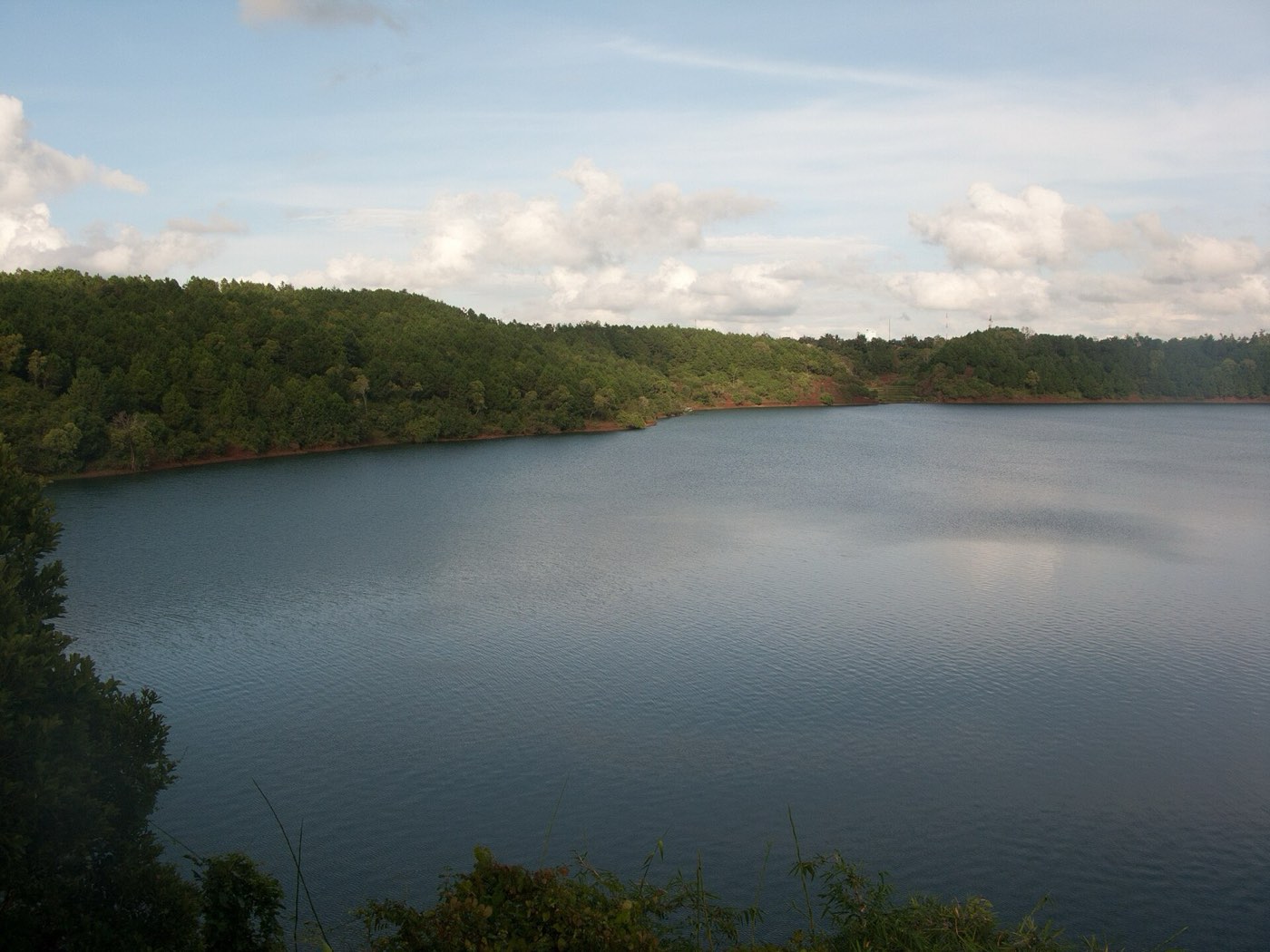
Biển Hồ Lake (T'Nưng) near Pleiku
Biển Hồ Lake, 7 km from central Pleiku: the route, 10,000 VND ticket, electric cart, best time to go and why this crater lake supplies the city's water.
By the Xin chào Pleiku editorsRechecked
On this page
Ask a Pleiku local where to take a guest and Biển Hồ Lake usually comes first, because from the centre it is one stretch of Highway 14. It is also the water supply for the whole city, so it is worth knowing a little before you arrive rather than snapping one photo and leaving. This guide goes from the route to the ticket, the best season and the lake itself, and ends with the tea road close by.
Quick plan
- Time: give it a morning or an afternoon; the lake and the tea hills fit one half-day together, and the walk from the gate to the water is almost 1 km.
- Without a motorbike: take a Grab or taxi from the centre (about 7 km) and agree a pickup time for the way back.
- Cost: adult ticket 10,000 VND, children over 1.2 m 5,000 VND, under 1.2 m free; electric cart 10,000 VND per person per ride (prices from June 2026).
- When: early morning or the cool afternoon, on a dry day; Tết is crowded.
- Bring: a hat and water, a thin jacket for wind, a rain jacket in the rainy season.
Getting from central Pleiku to Biển Hồ
Biển Hồ is about 7 km from the centre of Pleiku ward along Highway 14, north of the city. Without a motorbike, a Grab car from the centre is the easy way: tell the driver “Biển Hồ” and agree on a pickup time for the way back.
On Phạm Văn Đồng street (which is Highway 14) head towards Kon Tum, turn right at the Biển Hồ crossroads onto Tôn Đức Thắng street, and drive about 2 km more to the lake. The 2 km runs from the Tôn Đức Thắng and Highway 14 crossroads, on a paved road lined with rows of pine trees.
Tip: Turn on your phone map from the crossroads so you do not miss the right turn.
Entrance ticket
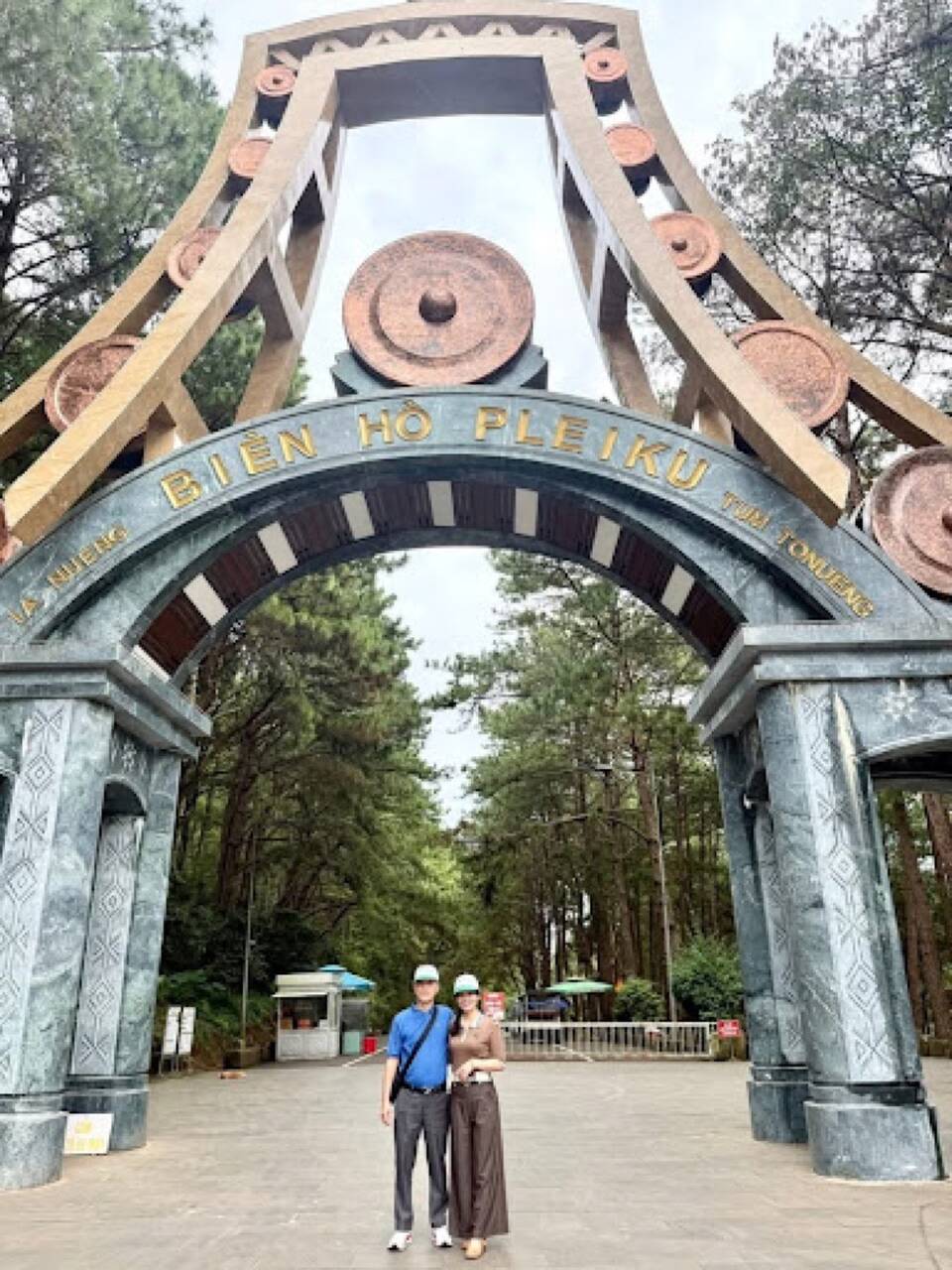
Tickets are 10,000 VND for adults and 5,000 VND for children over 1.2 m; smaller children go free (prices from June 2026). The window is right after the entrance arch, so leave the car or bike in the large parking area and walk in.
Inside the lake: walk or take the electric cart
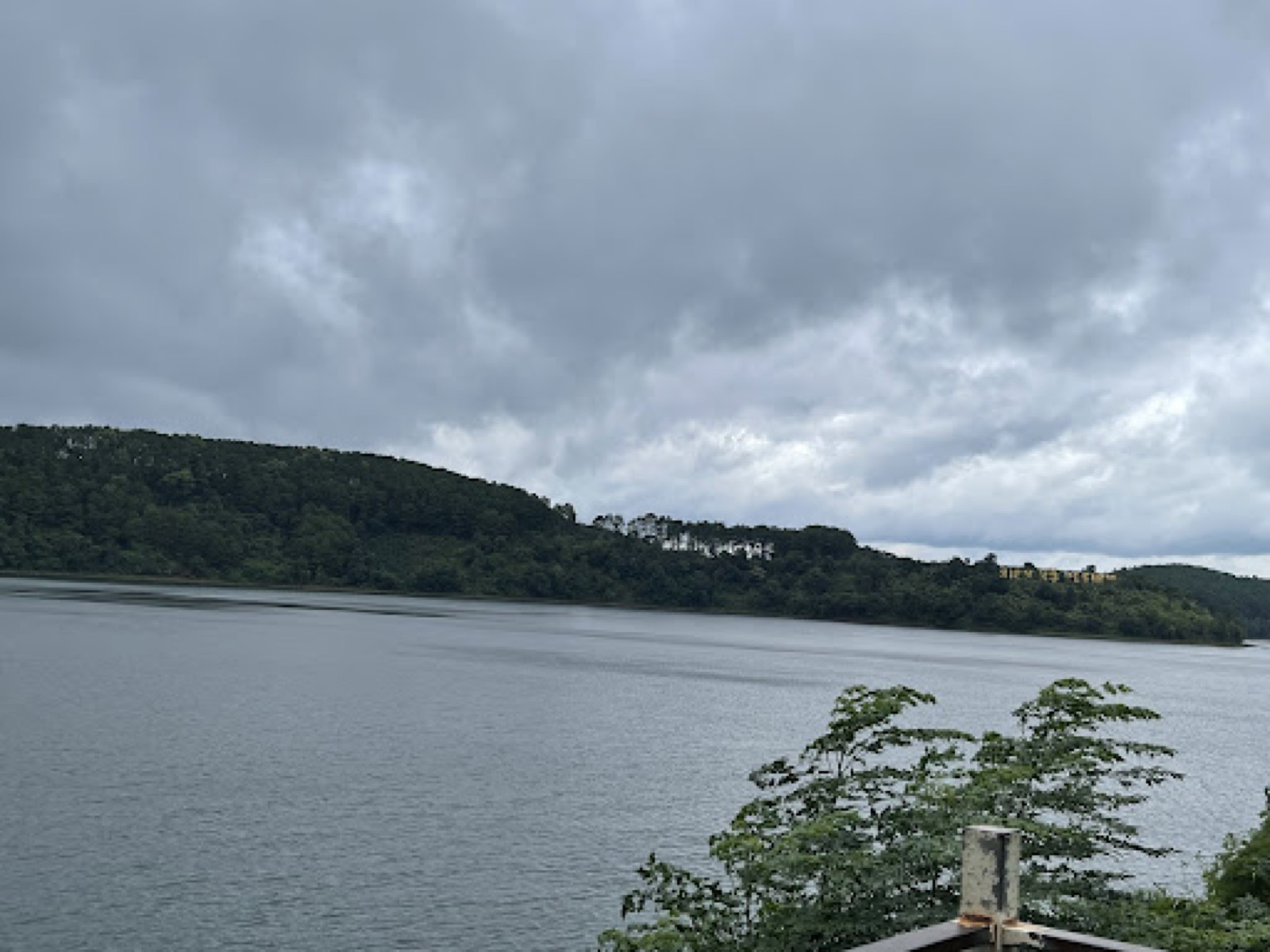
From the entrance arch down to the water is almost 1 km. Electric carts carry up to 10 people at 10,000 VND per person per ride, and the trip to the lake takes about five minutes. For the way back you buy a cart ticket at the lakeside end.
We recommend the cart one way and walking back with older relatives or small children, or at hot noon. Early morning or in the cool afternoon, walk both ways under the old pines along the shore; it is the prettiest stretch.
At the end of the road, stone steps lead to a viewing point with a 15 m white marble statue of Quán Thế Âm (Guanyin), restored since late November 2018. Handmade souvenir stalls stand nearby, and it is the busiest spot for photos. Climb the steps, look out over the middle of the lake, then head back.
Tip: Bring a hat and water for the walk of almost 1 km. When the wind is strong, waves break on the shore like the sea, so a thin jacket helps.
When to go
Tết draws visitors from all over to the lake, so allow extra time for crowds then. Otherwise rain and sun decide the day; Pleiku weather helps you pick a drier week. In the rainy season bring a rain jacket and wait for a break, because the lake is all about walking outdoors.
The story behind it
Biển Hồ is a natural freshwater lake that formed in a volcanic crater that stopped erupting millions of years ago. It is also called T’Nưng Lake. The name “Biển Hồ” (“Sea Lake”) comes from local people calling the lake a “sea”, which makes sense when you stand before so much water on a plateau. It lies in Biển Hồ commune, Gia Lai province.
The water covers about 240 hectares, is 12 to 19 m deep and sits about 800 m above sea level.
Two things make it stranger than an ordinary lake. No river flows in, yet the water does not run dry and keeps draining through a small stream. And locals tell a legend in which the tears of a survivor became streams, and the streams flowing to a village became the lake. Take that as folk story, not geology.
Why the lake matters for Pleiku’s water
Biển Hồ supplies the drinking water for the people of Pleiku city, and it is an important freshwater source for Pleiku ward and the neighbouring communes and wards. Its water quality is high compared with other large surface waters in the Central Highlands.
So you are standing next to where the whole town gets its water, not just a viewpoint: take your rubbish with you.
The lake is protected heritage too: Biển Hồ became a national scenic heritage site in 1988, the only Gia Lai landscape awarded national status that year. The Biển Hồ archaeological site has been under excavation since May 1993, and some finds are on show in the Gia Lai Provincial Museum. The lake is also known as a big fish pond of the highlands, and the small pine woods around it shelter many birds.
Pair it with Biển Hồ Chè and the century-old pines
Once at the lake, you can carry on to Biển Hồ Chè (Biển Hồ Tea), on a road leading to a row of pines over 100 years old and the old Bửu Minh Pagoda. From Pleiku airport, follow Highway 14 towards Kon Tum for 7 to 8 km, then turn right onto Lê Văn Sỹ street. The tea garden is on the right of the pine row, and at the end of that stretch a left turn reaches Bửu Minh Pagoda.
It has a story, not just tea: in 1919 to 1920 a French company, P.I.T., applied to clear land north of the lake for tea, and the tea garden is tied to the road of pines more than 100 years old.
Give both one half-day, since they lie in the same direction out of town. Directions and what you find at the tea garden are on the Biển Hồ Chè page; for one more stop to the north, read about the Chư Đăng Ya volcano. More places are under Things to do.
Our pick: to stay a night and reach the lake at first light, Pleiku Adventures Homestay, among coffee gardens near the lake. Brad, an Australian who lives in Pleiku, runs it and speaks English.
What may change before you go
Biển Hồ lies inside the Biển Hồ and Chư Đăng Ya tourism area, designated a national tourism area in late 2023, and the province approved the brief for its master plan to 2050 in January 2026. The area is in a long-term development plan, so prices and paths at the gate may change.
Sources
(7)
- Giới thiệu điểm văn hóa, du lịch trên địa bàn xã Biển Hồ
- Biển Hồ (hay còn gọi là Hồ T'Nưng) - Danh lam thắng cảnh
- Gia Lai: Thu phí tham quan tại Di tích thắng cảnh Biển Hồ trong dịp Tết Nguyên đán 2019
- Hồ T'Nưng - Wikipedia tiếng Việt
- Quy hoạch cấp xã - Xã Biển Hồ (danh sách quyết định)
- [REVIEW] Biển Hồ Pleiku (video, đăng 10/06/2026)
- Khám Phá Biển Hồ Pleiku Gia Lai (video, đăng 03/06/2026)
Photos
(3)
Phó Nháy / Wikimedia Commons, CC BY-SA 3.0 · Khương Nguyễn · Độ Nguyễn Tấn

Spotted an error? Send a correction · How we choose sources