Things to do
Plei Ốp village: a Jrai village inside Pleiku
Visit Plei Ốp, a Jrai village 5 km from central Pleiku: the communal house, 54 wooden statues, community tour, homestay, food and village manners.
By the Xin chào Pleiku editorsRechecked
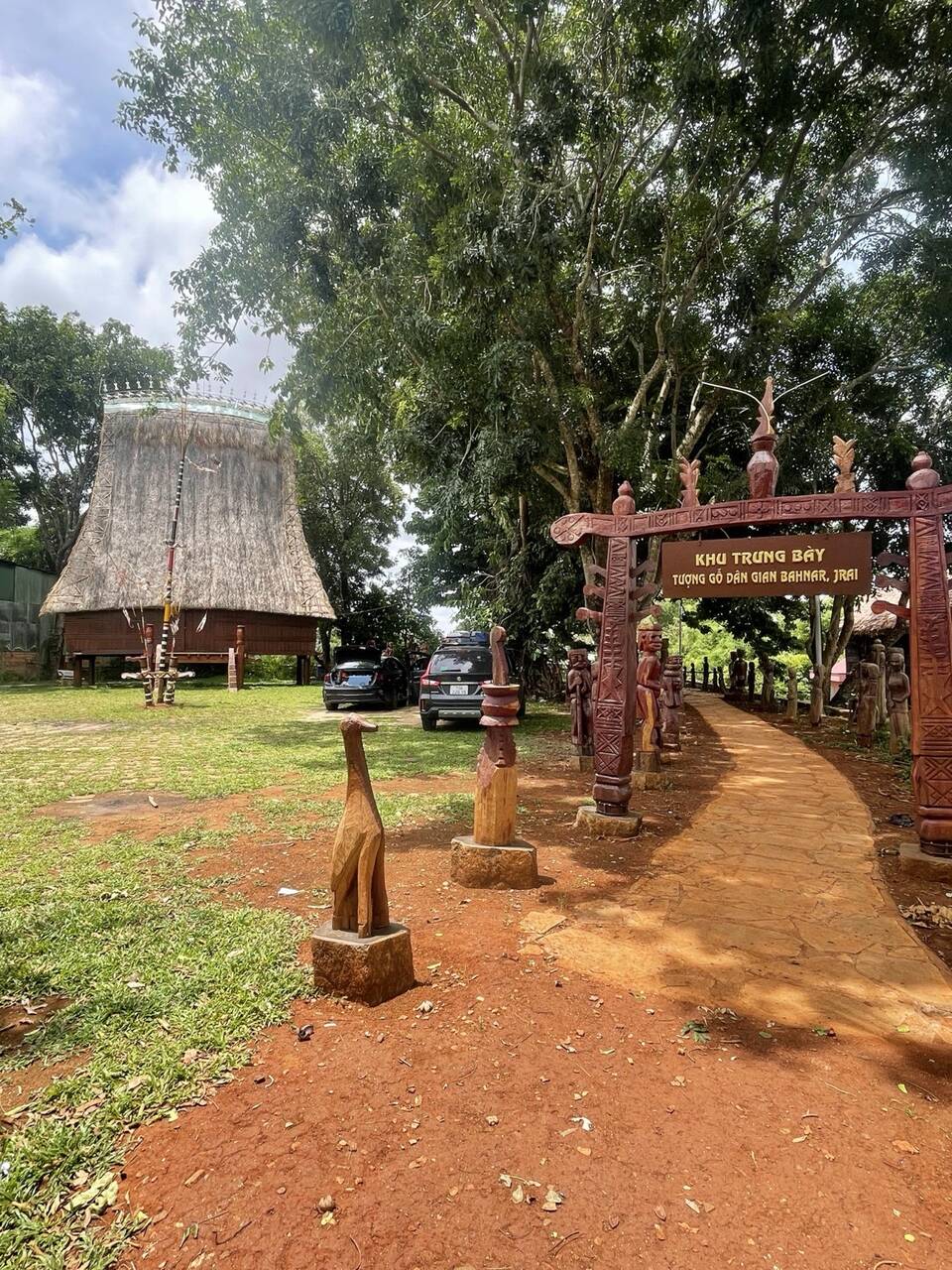
Plei Ốp is the nearest real Jrai (Jarai, an ethnic minority of the Central Highlands) village to the city: a quiet “village inside the city” in the middle of Pleiku, where the communal house, the nhà rông, is still the heart of village life. It is a community that now welcomes visitors, so how you behave matters as much as what you see. Below: getting there, what to see, the tour, food, when to go and village manners.
Getting there from the city centre
It is a short hop from the centre, in Pleiku ward (the former Hoa Lư ward). Without your own vehicle, take a taxi or a Grab bike; a traditional motorbike taxi (xe ôm) charges about 7,000–10,000 VND per km (October 2026). Put “Plei Ốp village” into your map app. The village is close to Great Unity Square (Đại Đoàn Kết), the provincial museum and Minh Thành Pagoda, so it combines easily into one outing.
What to see
Start with the communal house and the statues, then the water drop and the crafts: the easy-to-see first, the parts that need someone to explain them after.
The communal house and the wooden-statue yard
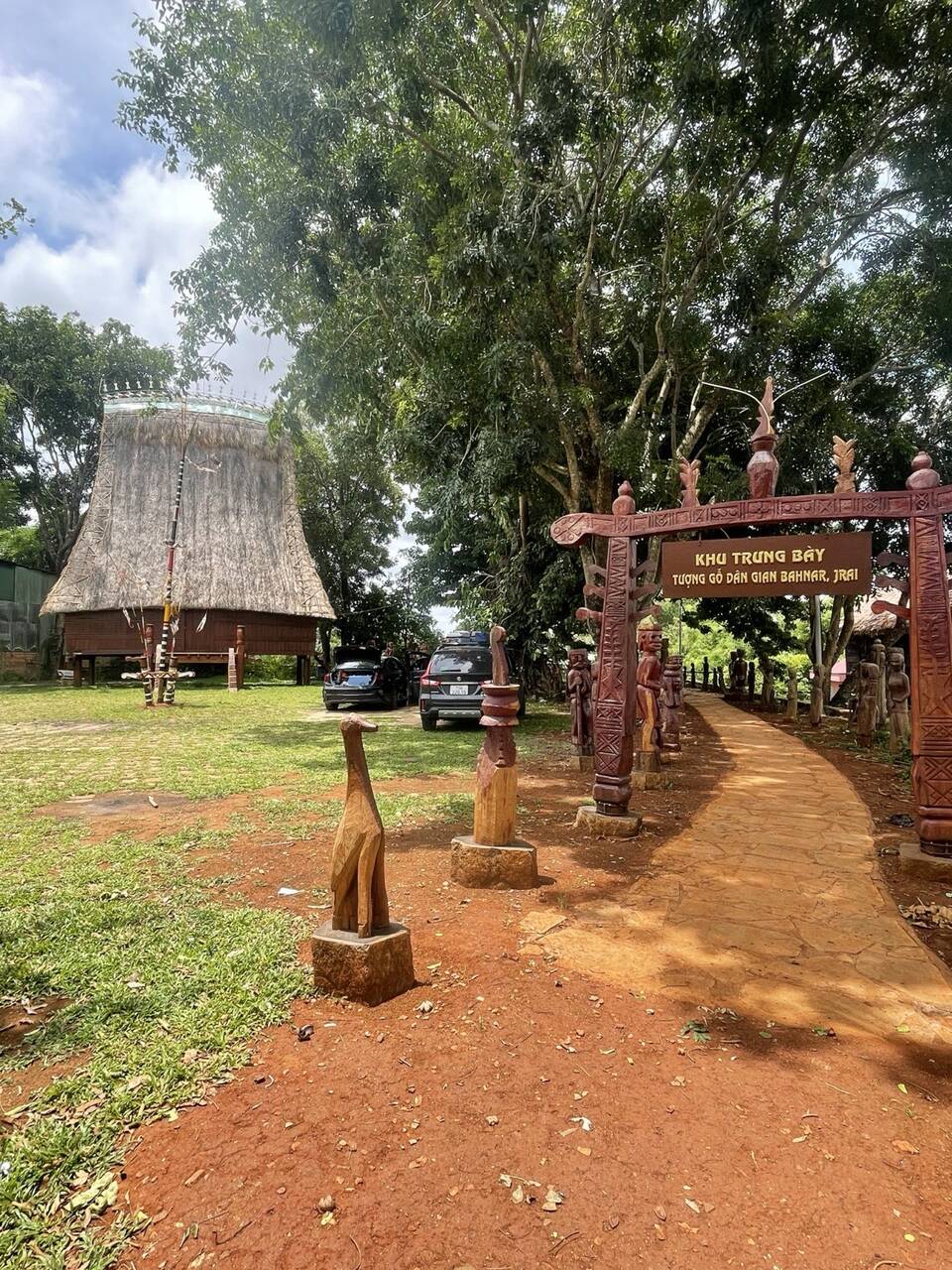
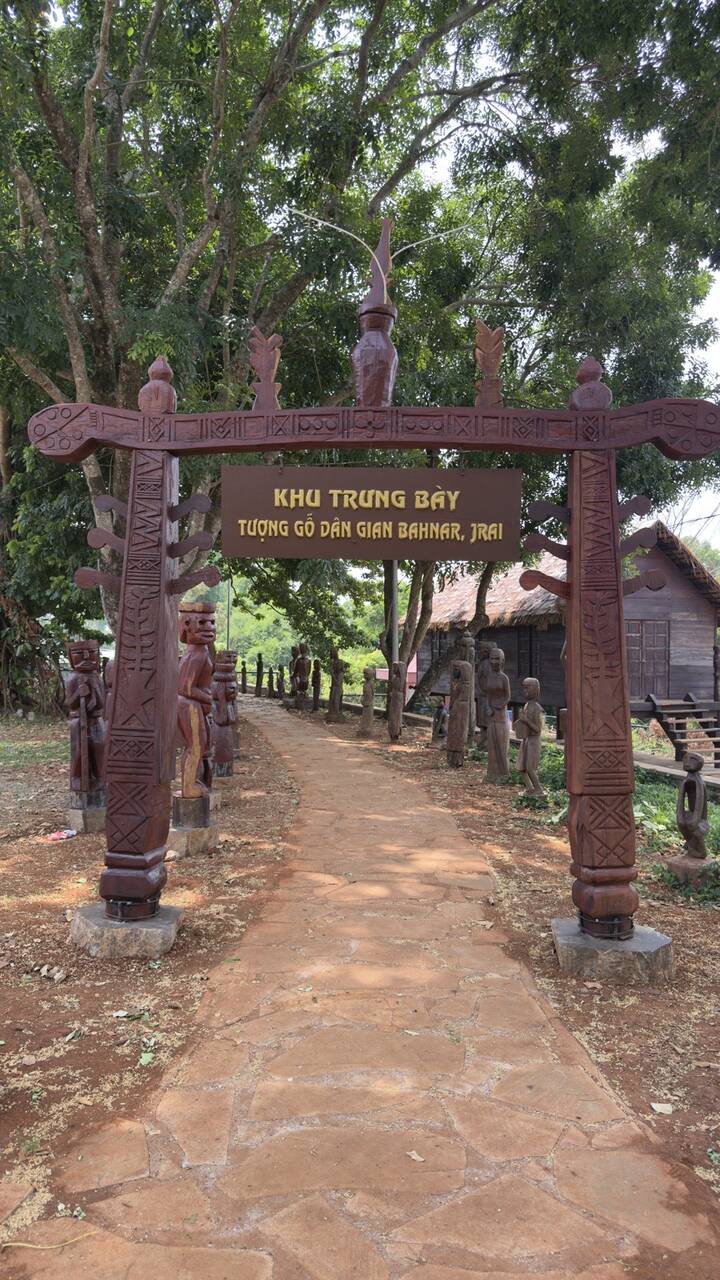
The village is dominated by the Jrai communal house, with its high curved roof and a ceremonial pole. The nhà rông is the soul and cultural symbol of the village, where festivals and gong performances happen. Inside are musical instruments, bram masks and the village’s set of gongs.
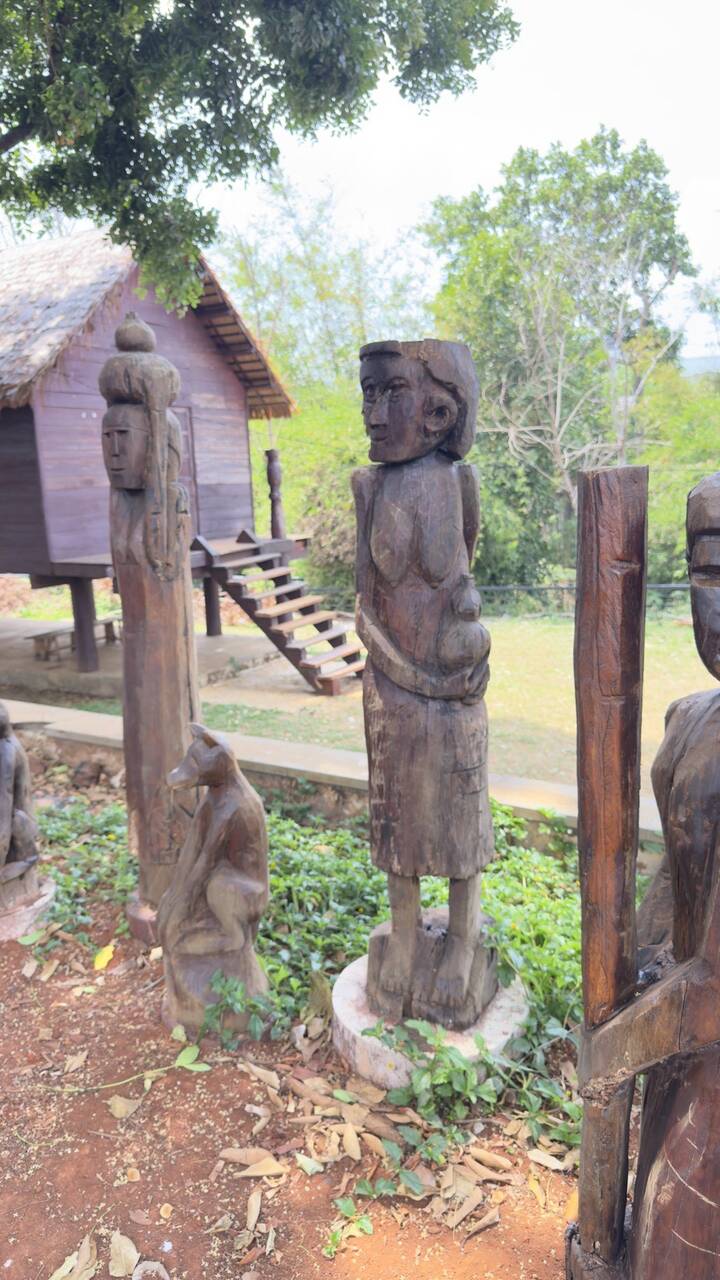
On the left of the yard in front stand 54 wooden statues by Gia Rai and Bana carvers, showing everyday life from gongs, drums and xoang dancing to hunting and rice-wine drinking. One thing to know before you photograph them: in traditional Gia Rai culture, wooden statues were only for the dead and stood at tomb grounds. The ones at the communal house today are cheerful and act as cultural ambassadors for the village, so treat them with respect, not as photo props.
The water drop and the festivals
For the Jrai here, water is the source of life, so every year they hold the Water Drop Offering Festival to ask the water spirit to protect the villagers. Other ceremonies include the Pơ Thi, a ritual to send the dead back to their ancestors, and a new-rice festival. The experience tour stops at the water drop so you can learn about the Jrai belief in many spirits.
On the morning of 30 April 2026, Pleiku ward also restored the ceremony for a newly built communal house at the village’s nhà rông, with villagers and visitors taking part. It was part of the events for National Tourism Year, Gia Lai 2026.
Crafts and gongs
Villagers offer several activities for guests: brocade weaving, cooking, brewing jar wine, basketry and guided tours. The village has two gong teams, one of adults and one of teenagers, plus a xoang dance team. When a tour group or a cultural exchange comes, the village plays the gongs.
The experience tour and homestay
If you want to understand the village rather than just take photos, join the tour. The community culture tour covers the communal house and the water drop, brocade weaving, basketry, brewing rice wine and cooking traditional dishes. It is Pleiku’s first community cultural experience tour. You can stay in a villager’s home: Puih Alik’s house was the first in the village to invest in homestay lodging in the Jrai stilt-house style. He and his wife will also show you how to pick coffee, harvest rice, make rice wine and gather bamboo shoots and greens, if you wish.
The people who guide you are villagers: more than 50 were trained for six months in community tourism, and 49 received a community-tourism certificate.
What to eat
Look for grilled chicken in bamboo rice, one-sun-dried beef (bò một nắng) with yellow ant salt, and stream fish grilled in a bamboo tube.
If you are offered rice wine (rượu cần), take a small sip to show respect rather than refusing outright.
When to go
We recommend the end of the rainy season: wild sunflowers bloom along the village lanes, and villagers harvest rice and coffee and prepare rice wine and gongs. If you like yellow flowers, read about the wild sunflower season in Pleiku. It is also a good pick if you have little time.
What to wear and how to behave
Wear light, breathable, stretchy clothes and sports shoes, because the lanes are red dirt. Do not touch sacred things such as the ceremonial pole, the gongs or the rice-wine jars, and keep your voice down in the communal house, which is a place of worship. Ask before photographing anyone.
How the village came about
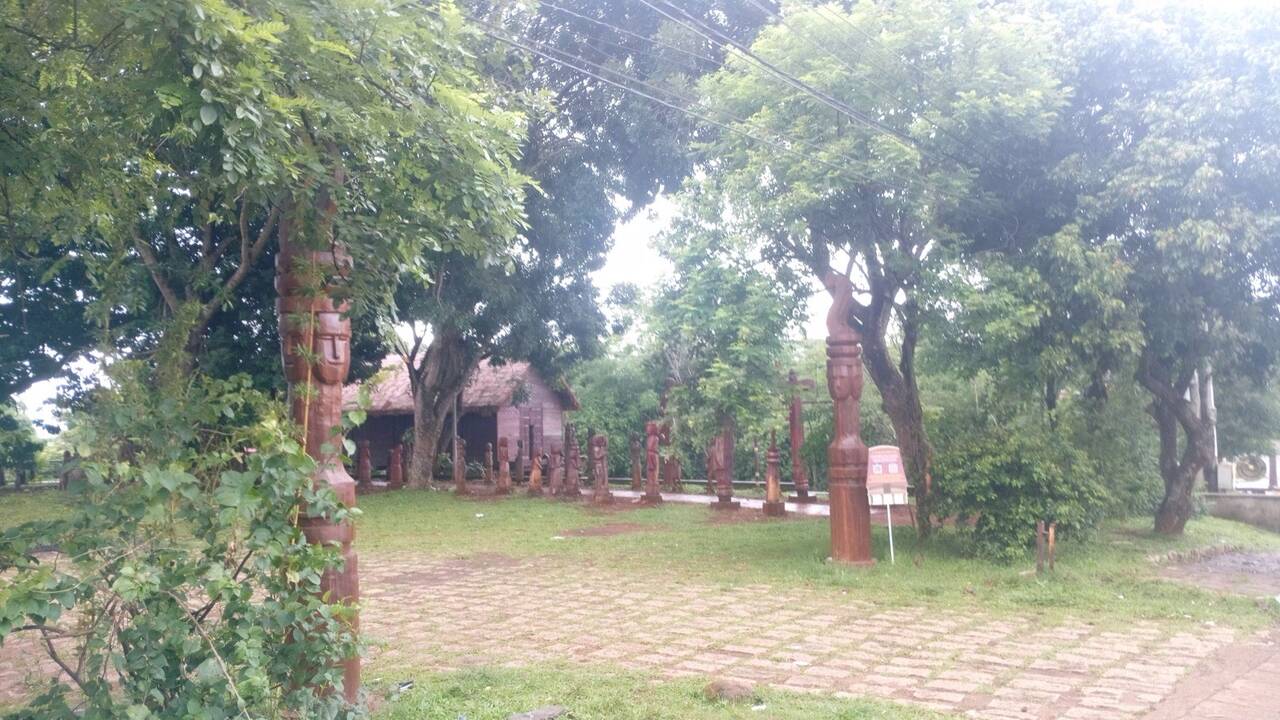
The village lies in the area of the former Hoa Lư ward. In 2008 it was planned as Pleiku’s first cultural tourism village. From late 2022 the city invested in a long house, stone paving and the water-drop grounds. Plei Ốp has kept its gong space, communal-house architecture and traditional crafts largely intact.
Pairing Plei Ốp with the square and Minh Thành Pagoda
The village is near Great Unity Square, the provincial museum and Minh Thành Pagoda. A simple plan: the pagoda in the morning, the village in the afternoon, and back to the square in the evening if gongs are playing that day. Details are in the Great Unity Square and Minh Thành Pagoda guides, and more places are in the Things to do section.
To read more, see the VOV report on Ơp village, the VietNamNet article on the century-old Jrai village and the Pleiku tourism page on Plei Ơp.
Read next
- Great Unity Square in PleikuThings to do
- Minh Thành Pagoda in PleikuThings to do
- Wild sunflower season in PleikuSeasons & festivals
Sources
(7)
- Làng Ơp giữ bản sắc Jarai, tạo sinh kế bền vững
- Làng trăm tuổi của đồng bào J'rai giữa lòng Pleiku
- Trải nghiệm tour du lịch cộng đồng ở phố núi
- Khám phá làng du lịch cộng đồng Plei Ơp
- Gia Lai phục dựng lễ cúng nhà rông mới của người Jrai tại làng Ơp
- Làng Plei Ốp (dữ liệu địa điểm Google Maps, đọc 25/10/2026)
- Sân bay Gia Lai: Vị trí, cơ sở hạ tầng, các chặng bay
Photos
(3)
Dung Trung · Trí Thích Tịnh · Hải sản Biển Rạng
Spotted an error? Send a correction · How we choose sources