Things to do
Great Unity Square in Pleiku
Great Unity Square, Pleiku: the bronze statue and 58 m relief, Saturday gongs 7 to 9 pm, the 2026 gong festival, and where to eat nearby.
By the Xin chào Pleiku editorsRechecked
On this page
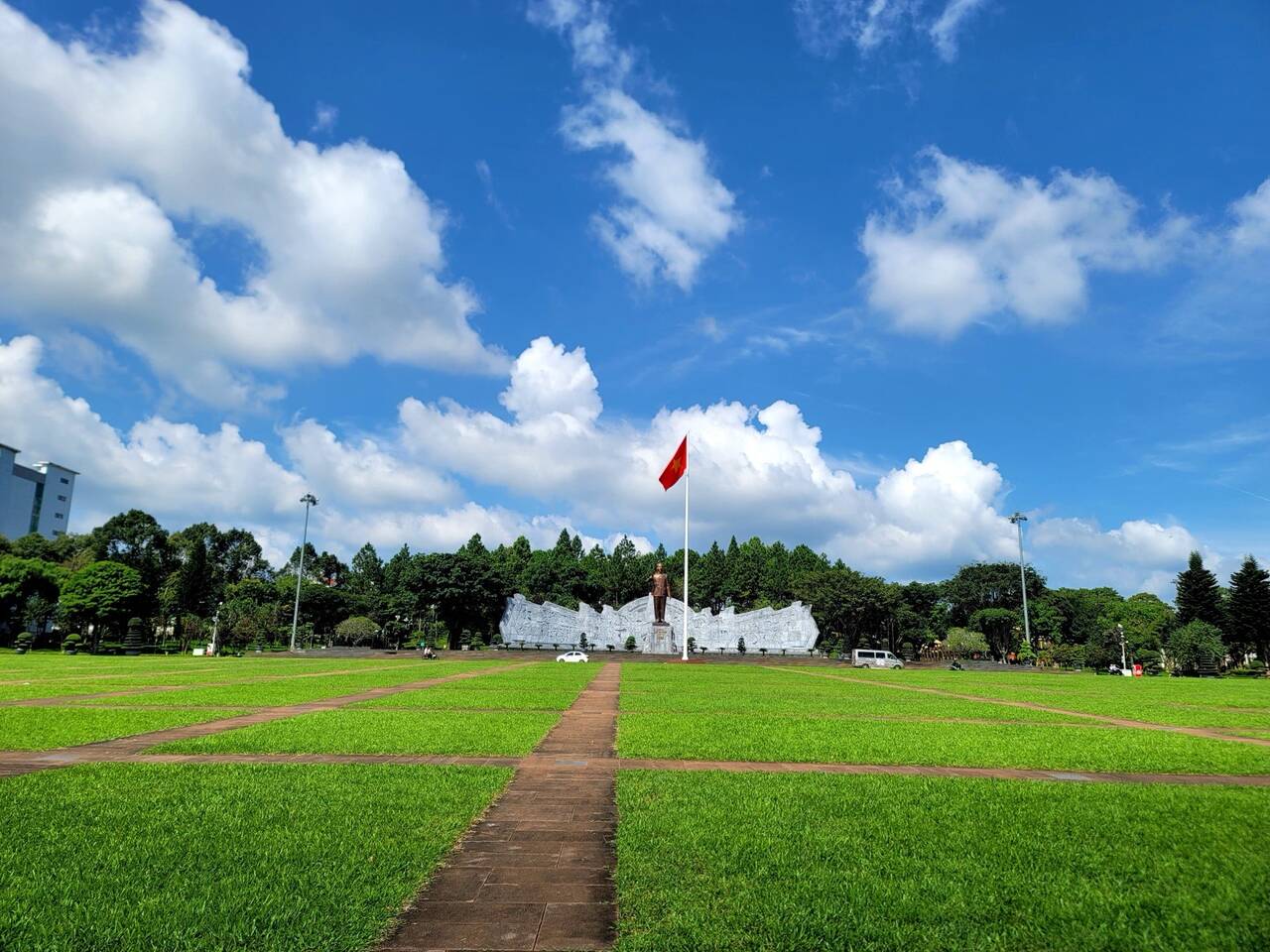
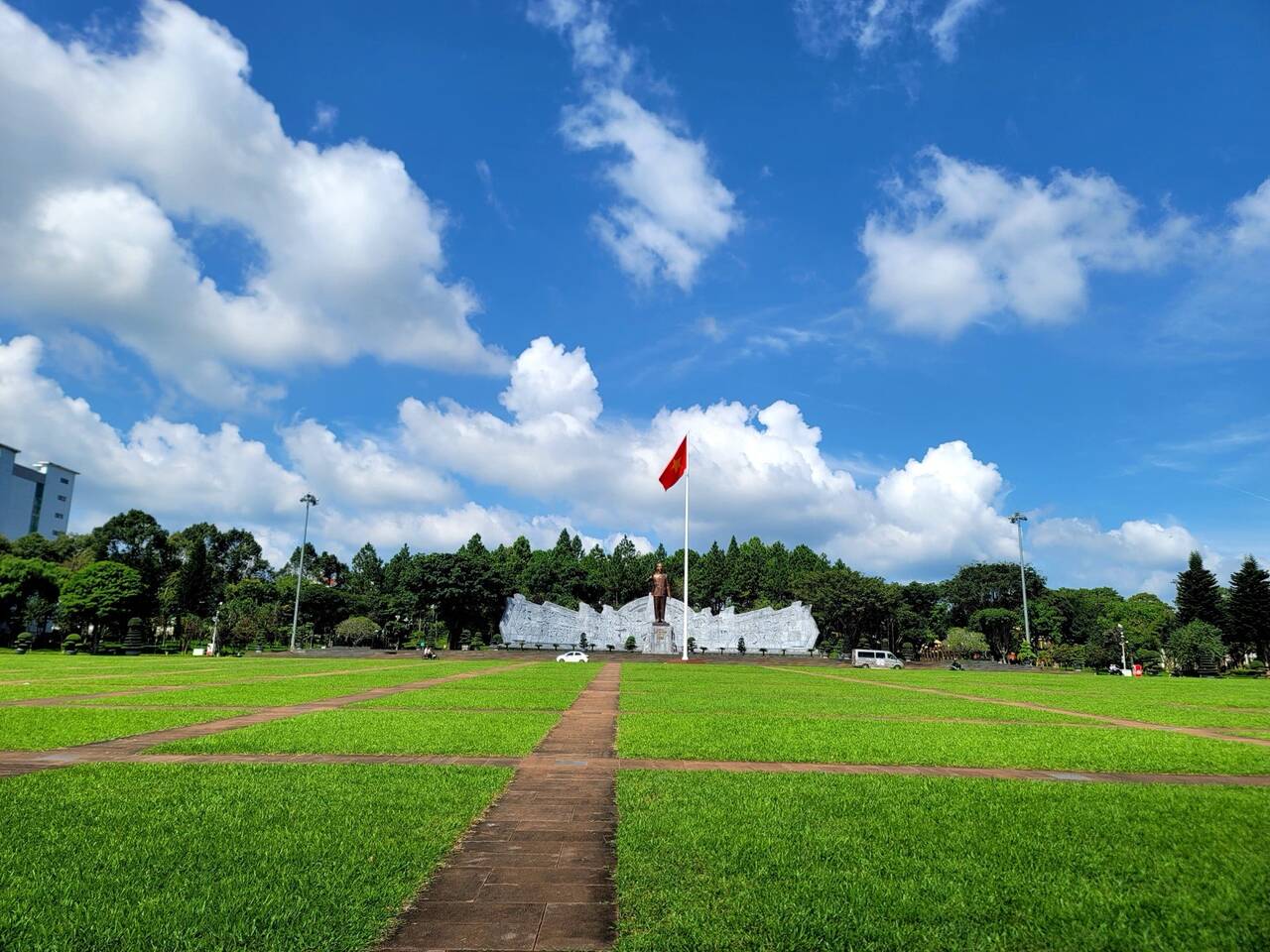
The square is so big that you stand at the edge of the lawn and see the monument and the white relief shrunk to a small band at the far end. The whole city comes out here for a morning walk and gathers on holidays, and visitors from other provinces come to lay flowers and hear gongs. This guide follows the order you will meet things: getting there, what to look at, when to come, where to eat and what to pair it with.
Where the square is and how to get there
In the centre there is nothing to plan: the square sits in the middle of Pleiku, close to Highway 14, at 124 Lê Lợi street. From the airport it is about 10 to 15 minutes by car or taxi. By car or taxi, aim for Anh Hùng Núp street, where the parking is, right beside the square.
What to see, in order
We recommend walking from the monument outwards. The square covers 12.5 hectares and is the heart of Pleiku; the Vietnam Book of Records recognised three records here: the bronze statue of Uncle Hồ, the stone relief and the largest bronze Central Highlands gong set in Vietnam.
The monument and the relief
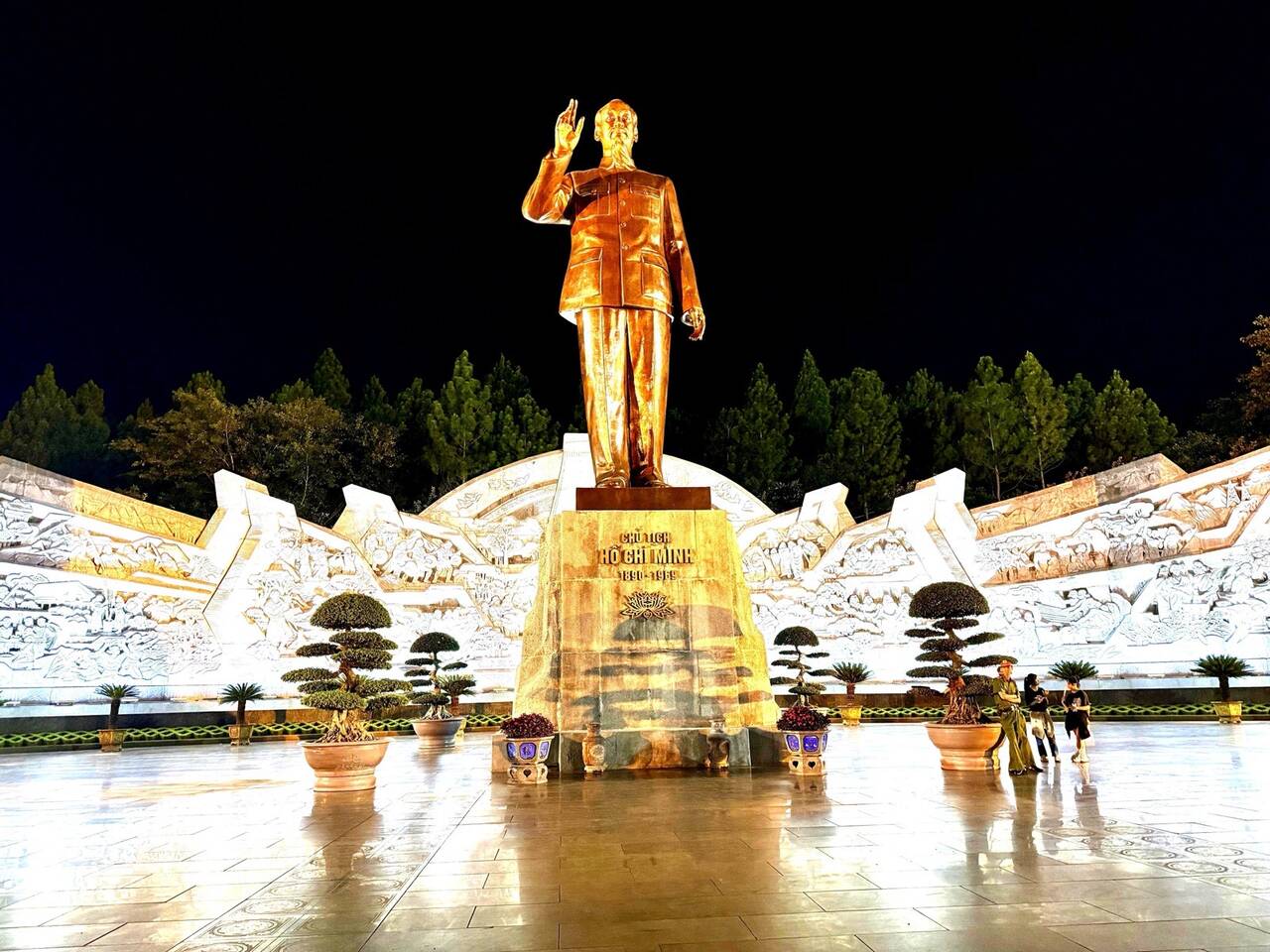
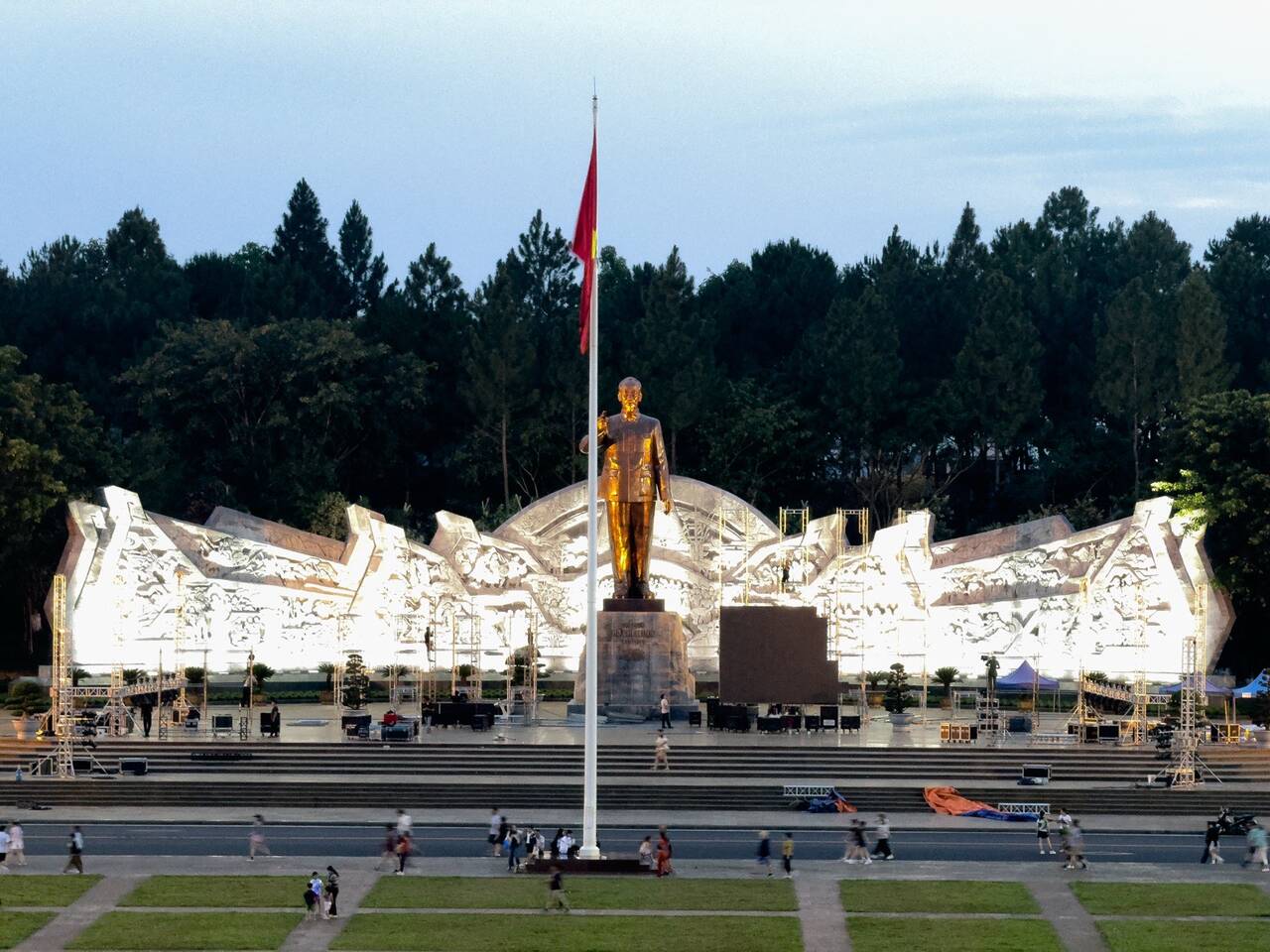
The bronze statue of Hồ Chí Minh is 10.8 m tall on a 4.5 m base and weighs 16 tonnes. Behind and around it runs a 58 m natural-stone relief, 11 m high, curved in an arc with lotus-petal shapes, carved with stylised communal houses, rice-wine jars, gongs and highland patterns. Step well back to take in the whole arc; that is the photo you want.
To the left of the statue a stone carries the letter Hồ Chí Minh sent to the congress of ethnic minorities of the south, held in Pleiku on 19 April 1946. That letter is why the monument stands in Pleiku; it is carved on the heaviest stone, 135 tonnes. In front of the monument, lawns cut in squares are crossed by granite paths for strolling.
The oath-stone cluster and the two gong sets
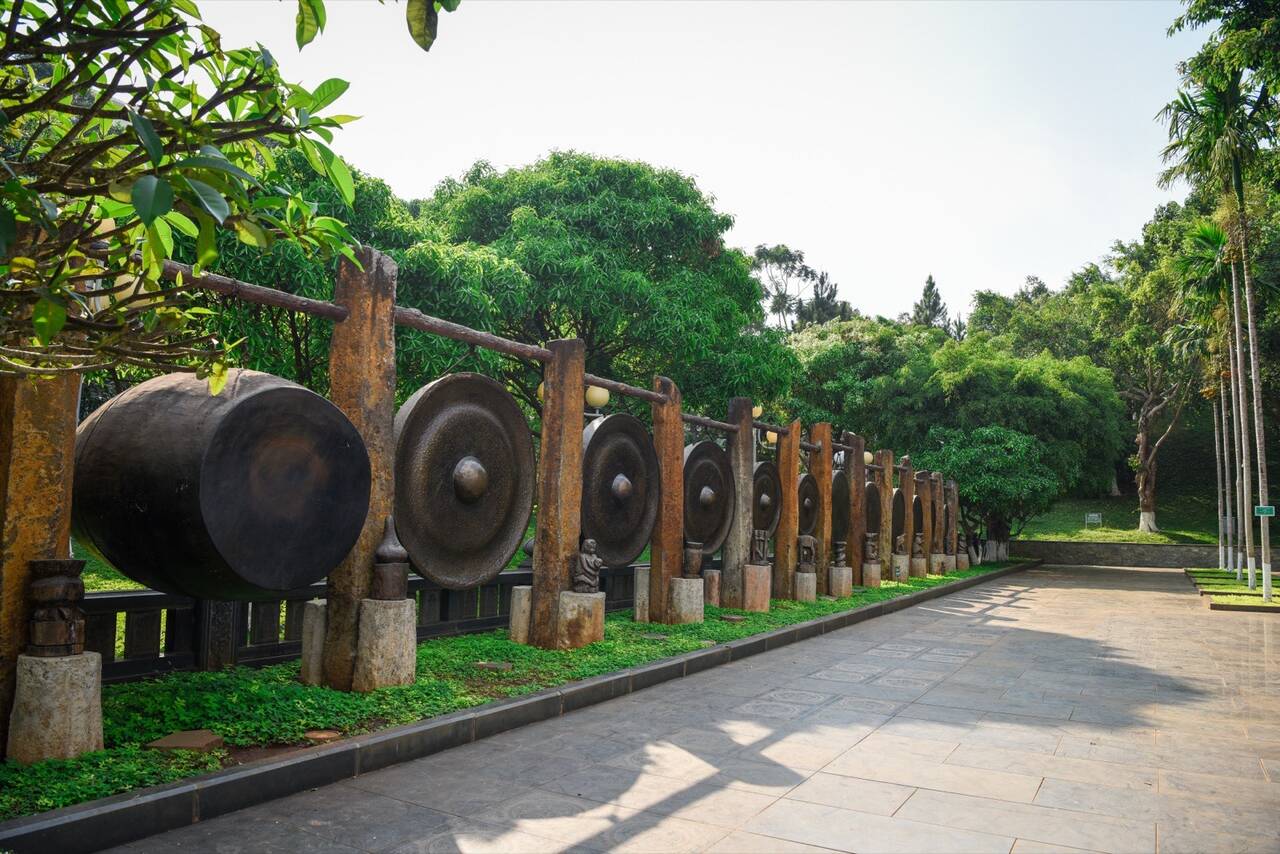
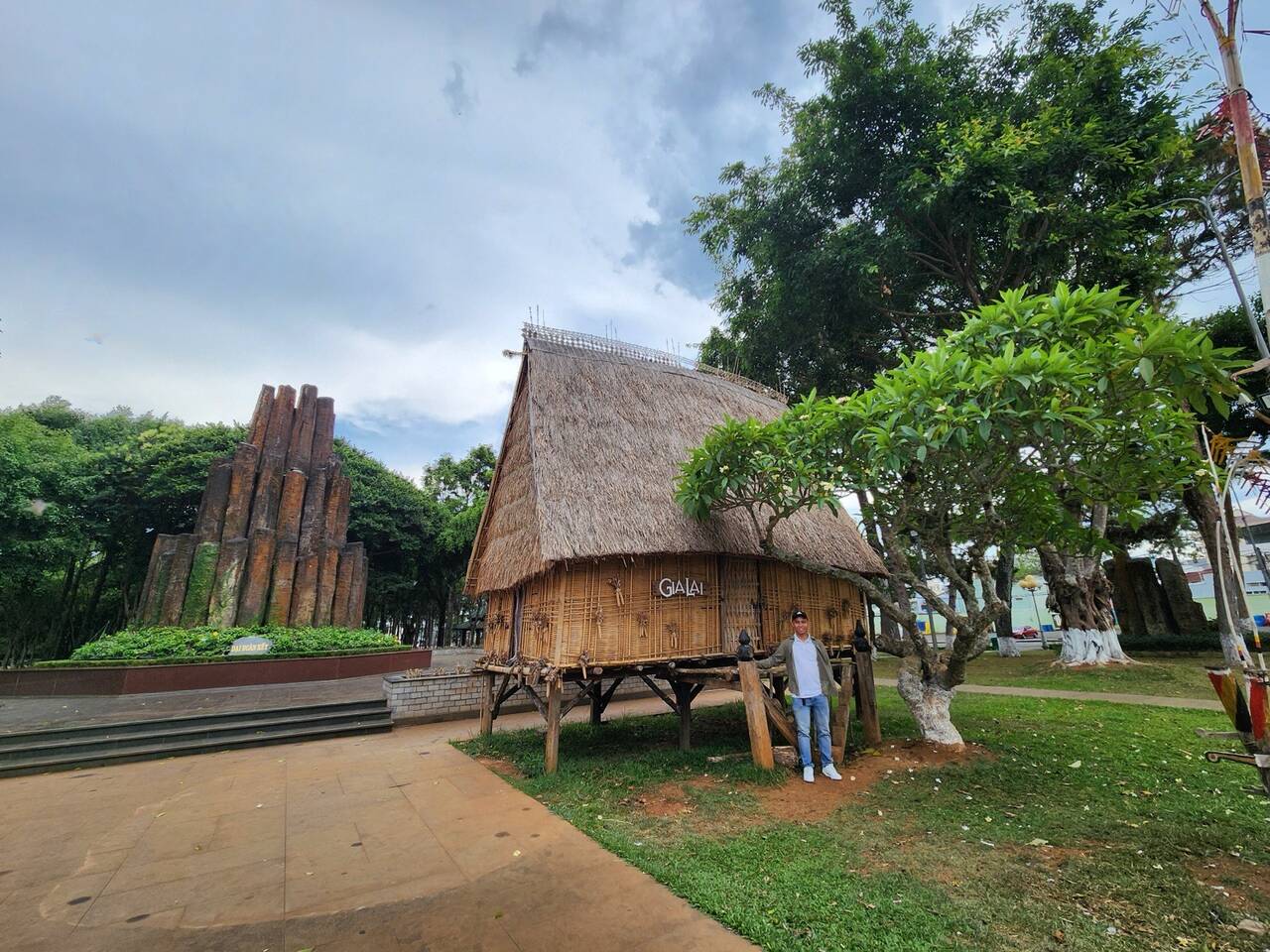
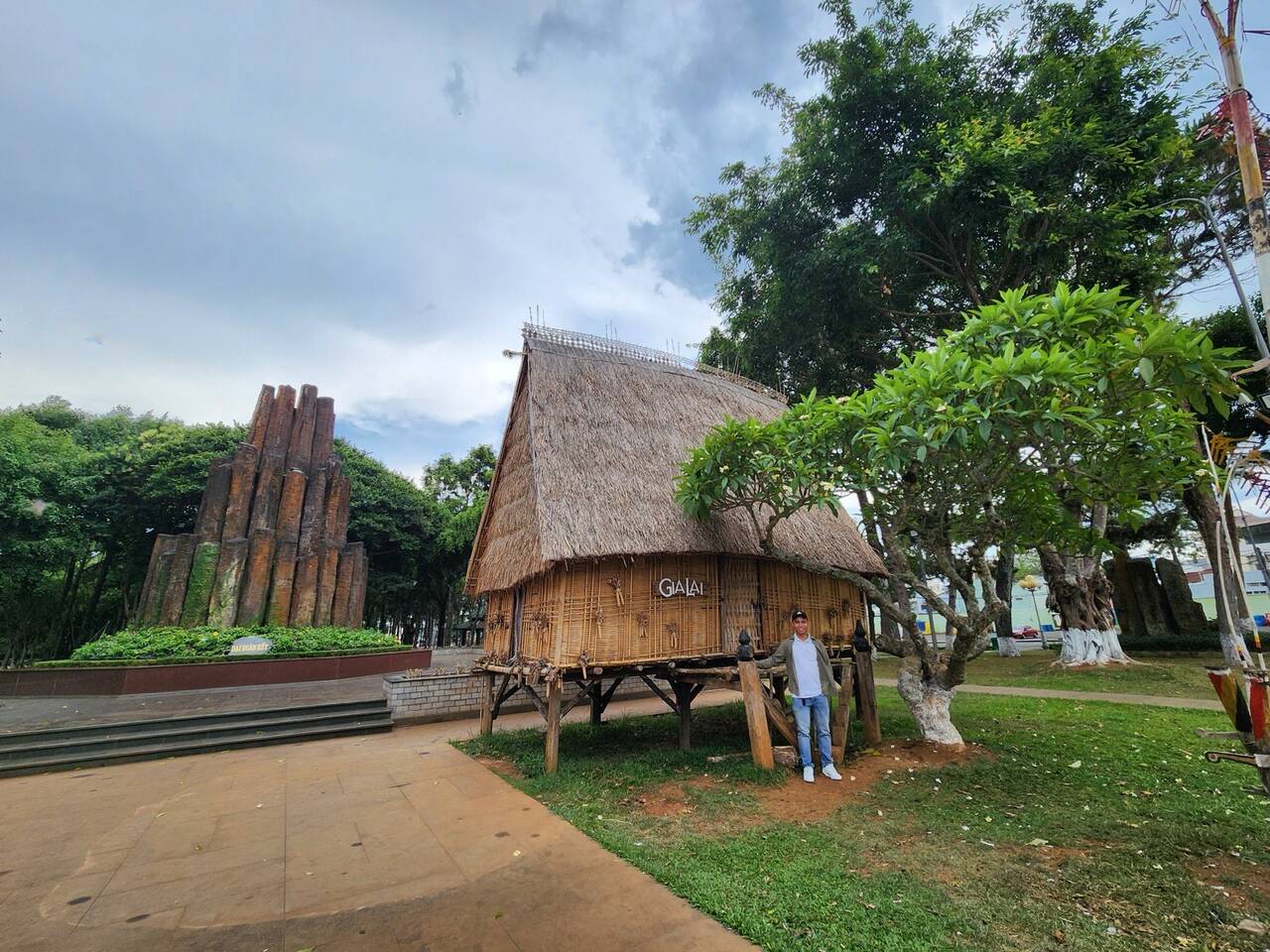
In the middle of the grounds a three-tier basalt tower rises in a cylinder, standing for the life of the 54 ethnic groups. Around it are 54 natural basalt columns from Gia Lai, tall and short, bundled like a big sheaf of chopsticks. On either side of the relief stands a Central Highlands gong set. The weekend gong programme is held in the square, so look at the gongs before the show starts.
The lawn, flagpole and the buildings around the square
A 25 m flagpole carries the red flag with the yellow star in the middle of the square. The open ground is made of 205 lawn squares, with room for more than 50,000 people at once and over 2,000 trees. Around the square stand the Antiquities Museum, the Gia Lai Provincial Museum, the Hồ Chí Minh Museum branch of Gia Lai and Kon Tum, and the statue of Hero Núp. The complex opened on 9 December 2012.
When to come
For quiet, come early: each morning the square has runners and walkers in cool air. For gongs, pick a Saturday evening: the weekend programme runs from March to December 2026, 7 to 9 pm every Saturday and on related holidays and events. More than 50 Bahnar artisans from Piơm village (Đak Đoa commune) have played here.
The bigger event is the Gia Lai International Gong Festival 2026, 30 October to 8 November, peaking on 6 to 8 November at the square, the Pleiku Museum and the central streets. The international gong night is planned for the evening of 7 November at the square. If you can come only once, we recommend that evening, but the schedule is a plan, so check before you go.
At Tết the square is busy too: thousands of locals and visitors come on New Year’s Eve for the arts programme, and on spring holidays it rings with gongs.
Eating and drinking near the square
The square is the first stop of the Chợ Nhỏ (“Small Market”) night street in Pleiku ward, open every day from 6 pm to midnight. The strip continues along Phùng Hưng street, the Chợ Nhỏ area and the nearby alleys, with the food and shopping around the Hội Phú stream. Come in the evening and keep walking into the night street.
For a seat, The Quao Coffee & More is on Phùng Hưng street right next to the night street, open 6:30 am to 10 pm every day. It has plenty of plants, which makes it comfortable on a rainy day, and it fills up at Tết for the view. For more places, see coffee in Pleiku and late-night food in Pleiku.
Pair it with Minh Thành Pagoda and Plei Ốp village
Both are close: Minh Thành Pagoda is about 2 km from it, and Plei Ốp village sits near the square, the provincial museum and the pagoda itself.
Here is a simple day: pagoda in the morning, then the village for the communal house and wooden statues, then back to the square when the sun softens, best on a Saturday so you can stay for the gongs. Details are on the Minh Thành Pagoda and Plei Ốp village pages; with one more half-day, head north to Biển Hồ Lake. More places in the city are under Things to do.
Read next
- Minh Thành Pagoda in PleikuThings to do
- Plei Ốp village: a Jrai village inside PleikuThings to do
- Biển Hồ Lake (T'Nưng) near PleikuThings to do
Sources
(17)
- Quảng trường Đại Đoàn Kết
- Khánh thành Tượng đài "Bác Hồ với các dân tộc Tây Nguyên"
- Nơi thể hiện tinh thần đại đoàn kết các dân tộc Tây Nguyên
- Quảng trường Đại Đoàn kết - Nơi hội tụ và kết tinh văn hóa Tây Nguyên
- Great Unity Square (dữ liệu địa điểm Google Maps, đọc 25/10/2026)
- Cồng chiêng cuối tuần - đánh thức không gian văn hóa giữa lòng phố núi
- Để không gian văn hóa cồng chiêng đại ngàn chạm biển xanh
- Gia Lai tổ chức Festival quốc tế Cồng chiêng
- Phố núi Pleiku nô nức đón chào thời khắc giao thừa Bính Ngọ 2026
- Phường Pleiku triển khai Phố đêm Chợ Nhỏ
- Sân bay Gia Lai: Vị trí, cơ sở hạ tầng, các chặng bay
- Review THE QUAO Coffee & More, đến 23/09/2026
- Giờ mở cửa các quán cà phê, đọc ngày 25/10/2026
- Địa chỉ các quán cà phê Pleiku
- Làng trăm tuổi của đồng bào J'rai giữa lòng Pleiku
- Khám phá chùa Minh Thành phong cách Nhật Bản giữa phố núi Gia Lai
- Google Maps: The Quao Coffee & More, bản đồ
Photos
(5)
VIET THANH DUONG · Tham Tran · Hero Xạ Điêu · B & B (ĐẠO BÁNH MÌ) · Jean-Francois Perigois
Spotted an error? Send a correction · How we choose sources